

The scientific paper “The Migratory Behaviour and Fallback Rate of Landlocked Atlantic Salmon (Salmo salar) in a Regulated River: does Timing Matter?” by Anna Hagelin, Olle Calles, Larry Greenberg, Daniel Nyqvist and Eva Bergman was recently published in River Research and Applications. The system studied is the River Klarälven, Sweden and in the abstract the authors write:

“The behavior of early (June–July) and late (August–September) migrating, adult Atlantic salmon, in The River Klarälven, Sweden, was analyzed using radio telemetry. River Klarälven is a regulated river without functioning fishways, instead upstream migrating salmon are trapped and trucked past eight hydropower plants before released back to the river. We distinguished two parts of the spawning migration, that is, one part being the migration from the place where the fish was released to the spawning grounds. The other part was a holding phase on the spawning grounds with little or no movements before spawning. The late salmon spent less of their total time on holding, 36.2%, and more on migration, 63.8%, compared with early migrating salmon, which distributed their time rather evenly between migration, 47.5%, and holding, 52.5%. In total, early salmon used 30% more time migrating and 156% more time holding than late salmon. Some Atlantic salmon (Salmo salar) fell back over the hydropower plant after release and got excluded from spawning. The fallback rates of transported, tagged spawners were higher in the early than in the late group in both years. The fallback rate in 2012 was 42.8% of the early group and 15.1% in the late. In 2013, there were 51.7 % fallbacks in the early group and 3.4% in the late. The salmon fell back on average 9 days after being released in 2012 and 16 days in 2013. A high mean daily discharge on the day of release increased the probability of becoming a fallback”

Download the paper here. If you don’t have free access, email any of the co-authors.
NoWPaS 2016

Posted by Daniel Nyqvist | Events

NoWPaS – the International Workshop for PhD and Post-Doctoral fellows on Salmo salar and Salmo trutta – will this year be organized at the INRS-CIRSA Field Station, Sacré-Coeur, Québec,Canada. The workshop will take place during 13th – 17th June 2016. The organizing committee writes:

nowpaslogo“Registration for the 2016 NoWPaS workshop is now open! For the first time since its creation, we are excited to bring the 12th NoWPaS workshop to Canada.

To register for NoWPaS 2016, please email gdauphin@unb.ca with your name, institution and tentative title before March 6th 2016.

The number of attendees at the NoWPaS 2016 workshop is limited, and registrations will be accepted on a ‘first come, first served’ basis.

Please disseminate this information to people/labs/research groups who may be interested.

Please find more information about NoWPaS in the attached flyer


Karlstad Universitet skriver om Johan Watz‘s forskning om öringens vinterekologi:

En öring. Foto från kau.se

“Ett tak över huvudet i form av ett istäcke påverkar öringars beteende. De blir mer aktiva och mindre stressade visar forskning vid Karlstads universitet. Klimatförändringarna som leder till mildare vintrar medför dock ändrade livsvillkor för fisken och kan på sikt bli ett problem för deras överlevnad.

Eftersom fiskar är växelvarma, antar deras kroppar en temperatur som ligger nära vattnets. Därför blir fiskar mycket långsamma i nollgradigt vatten. Detsamma gäller inte för däggdjur och fåglar, som är varmblodiga.

 – Många rovdjur som lever i närheten av bäcken, som till exempel mink, har därför ofta mer fisk i sin diet på vintern än på sommaren. Långsamma fiskar i kallt vatten är lätta byten, säger Johan Watz, som forskar om öringens beteendeekologi. Men öringar har utvecklat ett motdrag – de ändrar sitt aktivitetsmönster på vintern…”

Läs hela artikeln på kau.se.

Förra veckan försvarade Kim Magnus Bærum, vid Universitetet i Oslo, sin doktorsavhandling “Climate-driven population responses of resident brown trout, Salmo trutta, Trends and future projections.”. Eva Bergman från Karlstads universitet var opponent och rapporterar om ett väl genomfört försvar, med en intressant och trevlig diskussion. Som en del av disputationen gav Kim Magnus Bærum en  provföreläsning med titeln: “Freshwater biodiversity in a changing environment; spatial and temporal patterns”.

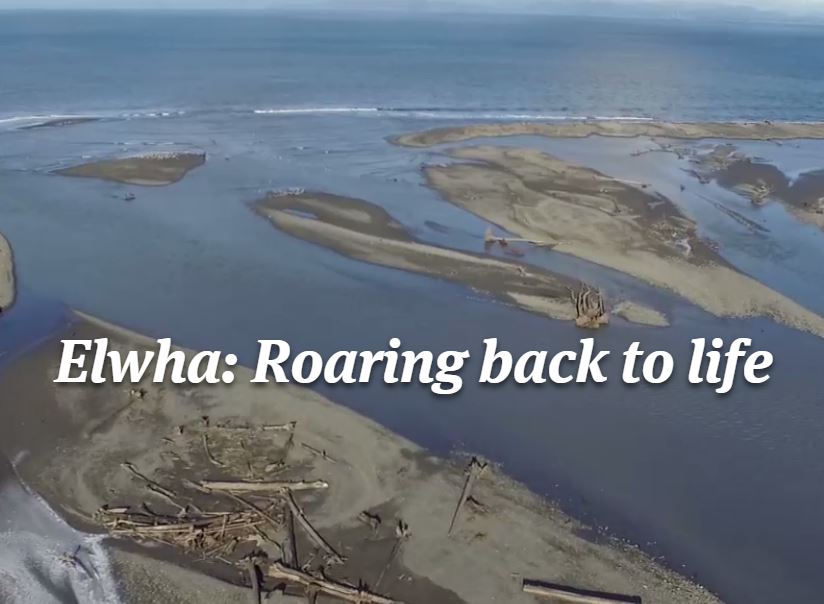
The Seattle Times har publicerat en snygg, delvis interaktiv, berättelse om de ekologisk effekterna av dammutrivningen i Elwha River, Washington, USA. Naturligtvis handlar artikeln om ökningen av flera av älvens laxbestånd. Men där finns också effekter på tillgången på död ved och och habitat för vatteninsekter, effekter på gnagare och fåglar liksom förändringar i sammansättningen av havsstrandens flora och fauna. Historien sträcker sig från älvens övre del och ut i havet. Läs den här.

elwah2

Mynningen till Elwah River efter damutrivningen. Foto från the Seattle Times artikel “Elwha: Roaring back to life”

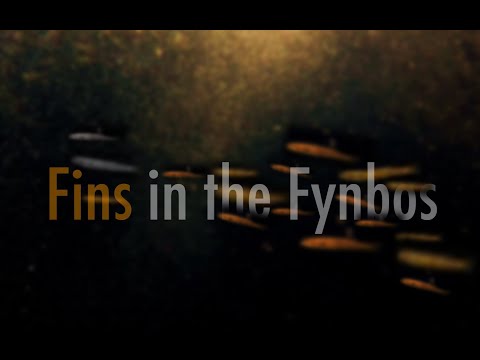
“Fins in the Fynbos: the hidden struggle of South Africa’s freshwater fish” is a short film about native fresh water fish in South Africa. It’s a story about a unique native fish fauna threatened by invasive species and habitat degradation. But also about ongoing conservation work:

YouTube Preview Image

Additional information is available on the YouTube-page.

Seminar: Evolution of host range

Posted by Daniel Nyqvist | Events

On Tuesday, February 16, Sören Nylin from Stockholm University will give a seminar about the evolution of host range.

Read more about Sören Nylin and his research here.

The seminar will be given at 13:30 in room 5F416 on Karlstad University. Everyone is welcome to attend!