

Larry Greenberg, professor within the River Ecology and Management research group at Karlstad University, is currently studying how increased winter temperatures may affect Atlantic salmon development and subsequent behavior and physiology. Here he describes his research, and shares two videos (one in autumn temperature and one in summer temperature) used to measure (count) ventilation rates on Atantic salmon parr:

“Embryonic temperature conditions are expected to affect an organism’s behavior, as behavior is linked to traits such as metabolic rate and growth. Examining the effects of embryonic temperature is particularly relevant in today’s society as unprecedented rates of climate change are predicted to occur during this century, with a larger temperature increase expected in winter than in summer. Hence, climate change will most likely have large effects on ectotherms (cold-blooded animals) that overwinter their eggs, as is the case for salmonid fishes. The aim of this project is to study the effects of water temperature during the egg stage on the behavior, growth and metabolic rate of juvenile Atlantic salmon.

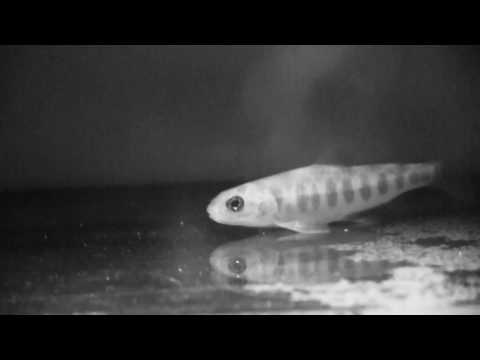
When it concerns metabolic rates, I hypothesized that elevated temperature during the egg stage will result in reduced standard metabolic rates for juvenile brown trout. Instead of measuring metabolic rates, I have measured breathing rates (ventilation rate), which has been shown to be correlated with metabolic rates. This was done in darkness when breathing rates are lowest, using an infrared-sensitive camera. The two film clips below show two different fish, both of which were raised at cold ambient water temperatures as eggs. One fish was filmed in 7 oC water and the other at 18 oC water.”
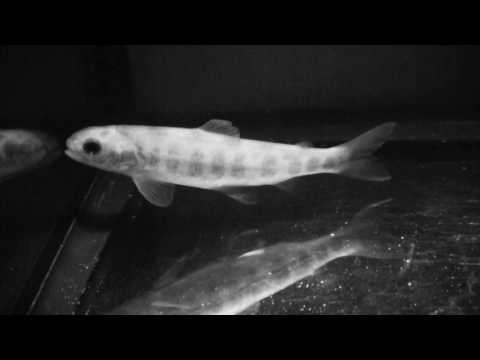
YouTube Preview Image YouTube Preview Image


trout_jw

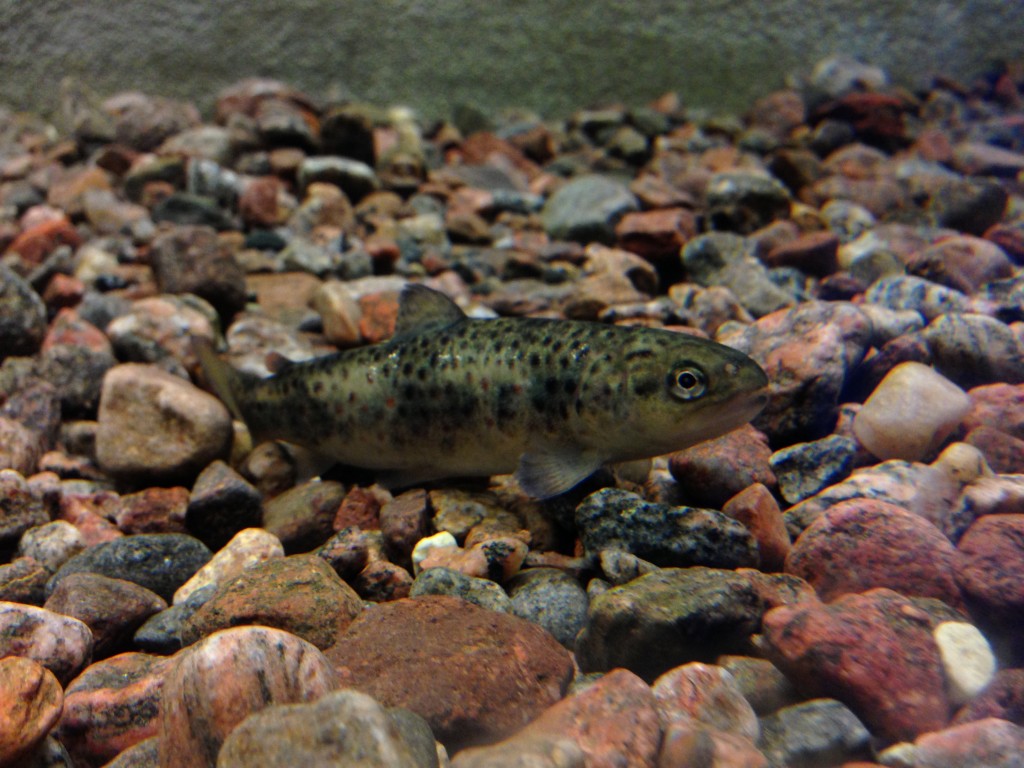
A juvenile brown trout in the experimental flume.

Johan Watz, postdoc at Karlstad University, recently published the scientific article “Stress responses of juvenile brown trout under winter conditions in a laboratory stream” in the journal Hydrobiologia. In the abstract he writes: “Winter can be a challenging period for fish in northern temperate rivers and streams, particularly in those that are channelized, structurally simple or regulated by, for instance, hydropower. In these systems, dynamic sub-surface ice formation commonly occurs and stable periods with ice cover may be short. Under these adverse conditions, access to shelters has been shown to be an important factor that influences overwinter survival, and exclusion from shelters by anchor ice may cause stress. Here, stress responses of juvenile brown trout under simulated winter conditions in an artificial stream were studied. Trout were subjected to three treatments in which the trout (1) were excluded from an instream wood shelter, simulating the effects of anchor ice, (2) had access to the shelter or (3) had surface ice cover in addition to the shelter. There was a positive correlation between ventilation frequency and plasma cortisol concentration. Trout without access to shelter had 30% higher ventilation frequency than trout with instream shelter and surface ice, but no differences in cortisol concentration or stress colour were found between the treatments. River regulation that reduces surface ice and increases anchor ice formation may lead to increased stress and consequently reduce overwinter survival rates.”. 

Access the paper here: Stress responses of juvenile brown trout under winter conditions in a laboratory stream.

Forskargruppen Naturresurs rinnande vatten vid Karlstads Universitet söker en eller två projektassistenter för arbete inom två forskningsprojekt på effekterna av dammutrivning. Det första projektet finansieras av KK-stiftelsen och bedrivs i Mörrumsån i samarbete med Sveaskog, Uniper vattenkraft och Power house, medan det andra projektet finansieras direkt av Karlstads universitet och bedrivs i Nianån, Gnarpsån och Enångersån (Hälsingland) i samarbete med Hudiksvalls kommun.

Projektassistenten/assitenternas arbetsuppgifter består i att i samverkan med övriga projektdeltagare genomföra fältaktiviteter som t.ex. telemetristudier på vandrande fisk, elfiske, provtagning av bottenfauna, inventering av växtsamhällen och bidra till att sammanställa insamlad data.

Läs mer om tjänsterna, och ansök, på Karlstads Universitets rekryteringshemsida. Sista ansökningsdag är den 24 maj, och anställningarna är tidsbegränsade. Mer information om projekten finns i bloggartiklarna Dammutrivning och fiskvänliga turbiner (Mörrumsån) och Dammutrivning i Gnarpsån och Nianån.

winooski

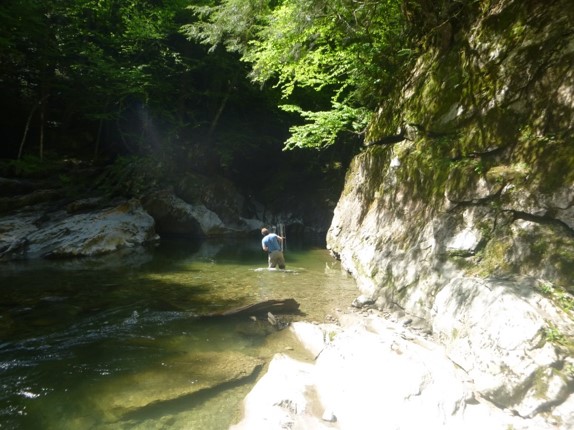
Tracking smolts in Huntington River, a tributary to Winooski River.

The accepted version of the scientific article “Downstream migration and multiple dam passage by Atlantic salmon smolts” by Daniel Nyqvist (Kau), Stephen McCormick (USGS), Larry Greenberg (Kau), William Ardren (US Fish and Wildlife), Eva Bergman (Kau), Olle Calles (Kau), and Theodore Castro-Santos (USGS) is available online at North American Journal of Fisheries Management. The paper presents a study on downstream migration and dam passage of landlocked Atlantic salmon smolts in the River Winooski, a tributary to Lake Champlain.

In the abstract the authors write: “The purpose of this study was to investigate behavior and survival of radio-tagged wild- and hatchery-reared landlocked Atlantic salmon smolts as they migrated past three hydropower dams equipped with fish bypass solutions in the Winooski River, Vermont, USA. Among hatchery-released smolts, those released early were more likely to initiate migration and did so after less delay than those released late. Once migration was initiated, however, the late-released hatchery smolts migrated at greater speeds. Throughout the river system hatchery released fish performed similarly to wild fish. Dam passage rates varied between the three dams and was highest at the dam where unusually high spill levels occurred throughout the study period. Of the 50 fish that did migrate downstream, only 10% managed to reach the lake. Migration success was low despite the presence of bypass solutions, underscoring the need for evaluations of remedial measures; simply constructing a fishway is not synonymous with providing fish passage.”

Access the paper here or contact the authors.

Kursdeltagare från Masterkursen “Vetenskapliga metoder i sötvattenekologi” rapporterar om en intensiv fältvecka:

“Måndagen den 24 april gick startskottet för fältveckan på Karlstads Universitet. Under kurserns första del fick vi lära oss konsten att suturera fisk och designa experiment. Första dagen fick vi lyssna till professor Erik Petersson från SLU berätta om etik och lagar kring djurförsök. Dagen fortsatte med förberedelser inför ett labbexperiment där vi studerade hur temperaturen i vattnet under laxens äggstadie påverkar dess förmåga att födosöka som ung fisk.Tisdagen och oKknsdagen ägnades åt labbexperimentet respektive arbete med sutur, bedövning och märkning av lax. Vi förberedde också inför fältarbete och resa till Ätran och Hertings krafverk där merparten av resten av veckan spenderades.

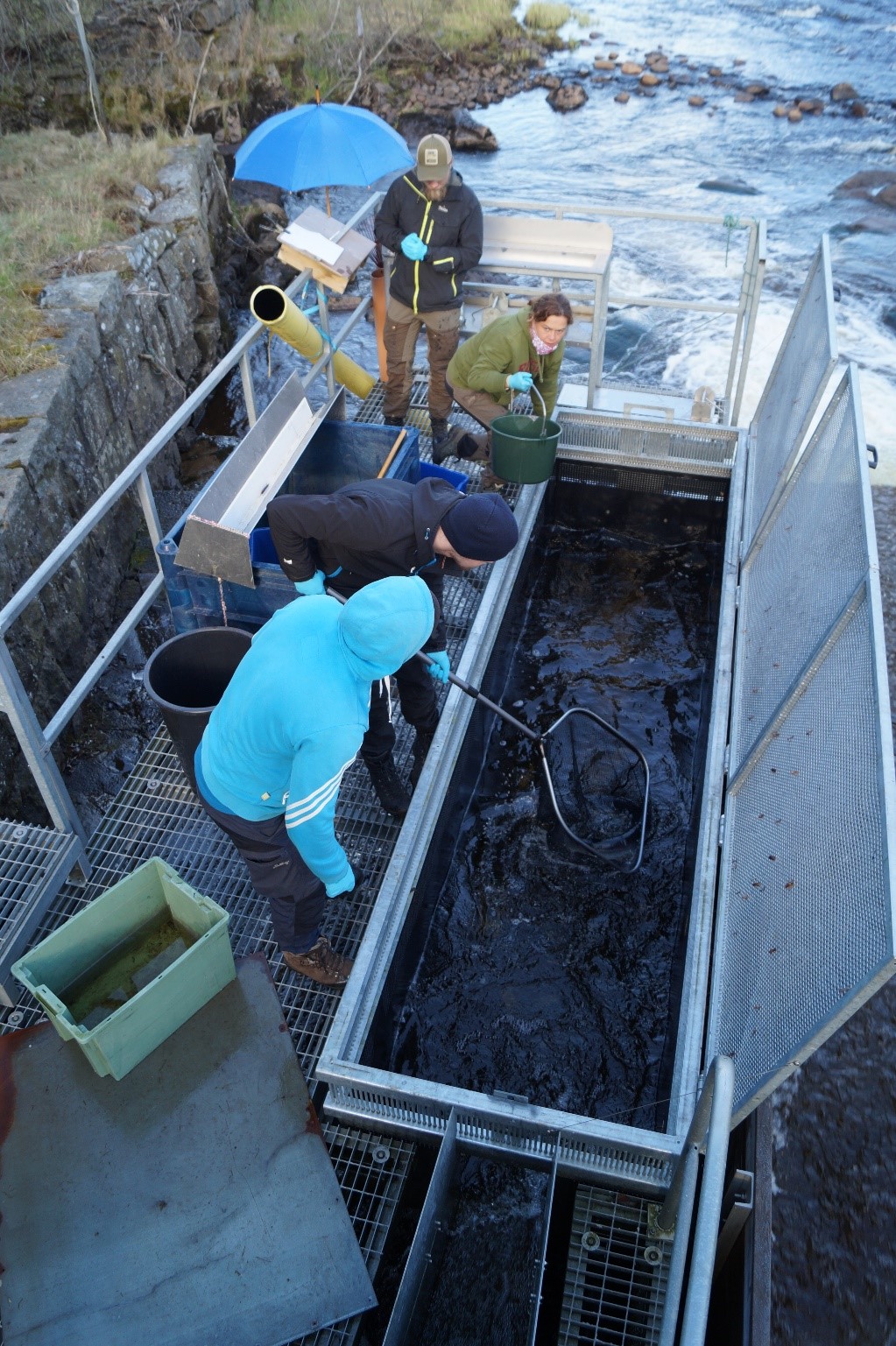
Väl på plats i Herting fick vi en rundvandring för att få kunskap om hur det ser ut och vilka åtgärder som har gjorts för att förbättra fiskens vandring förbi vattenkraftverket. Dagen efter blev vi indelade i tre grupper där varje grupp körde varsin station per dag. Den första station behandlade telemetri, där vi fick lära oss pejla radiosändare med mobil radiomottagare. Vi fick även lära oss mycket om tekniken. Andra stationen gick ut på att artbestämma, mäta och märka ett givet antal fisk fångade i en Wolf –trap-liknande fälla. Resten av den infångade fisken artbestämdes, räknades och släpptes ut. I den tredje stationen fick vi lära oss att fiska med ryssjor. Utöver arbetet i de olika stationerna ägnades en av dagarna till att besöka mindre kraftverk uppströms i Ätran, och se hur de har löst fiskvandringen förbi kraftverken Nydala kvarn och Vebro kraftverk i Vessigebro. I Nydala kollade vi på en fiskfälla och i Vessigebro fick vi se en ålyngeluppsamlare. Vi besökte även laxlekvatten vid naturreservatet Sumpafallen.

Sammantaget en trevlig och givande vecka med nya kunskaper samt erfarenheter! Vi rekommenderar stark denna kurs för framtida studenter, speciellt om du har ett intresse för vatten och fisk!

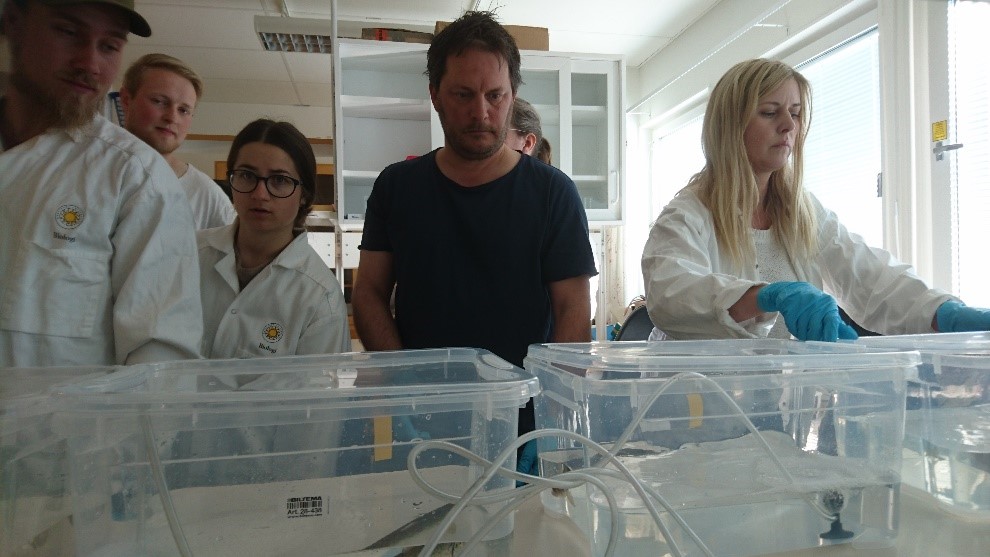
Fokuserade studenter som undersöker de olika nivåer som finns uppstår vid bedövning av lax.

Fokuserade studenter som undersöker de olika nivåer som finns uppstår vid bedövning av lab.

kurshel

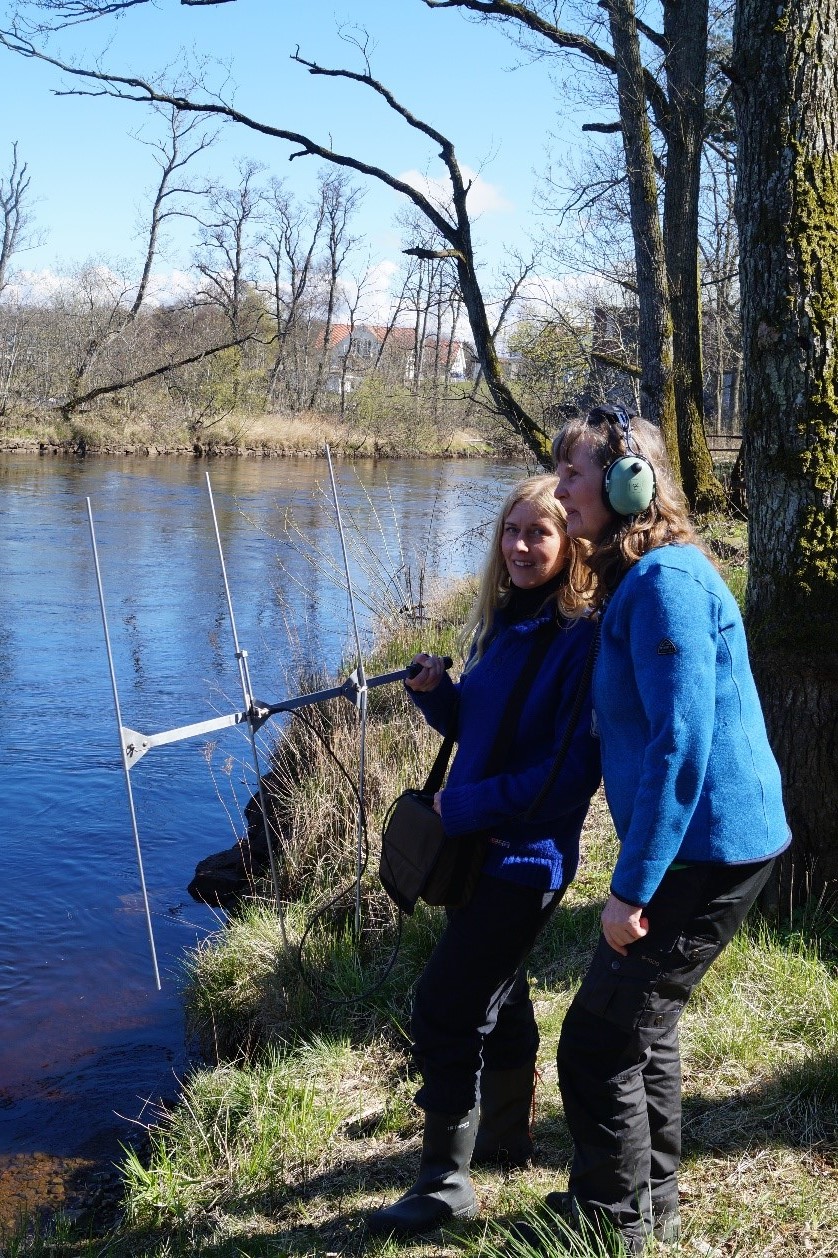
Maria Stjärnlöv och Lena Andersson pejlar efter radiosändare som har lagts ut på olika ställen runt Herting som är en av de olika stationerna.

kurs6

Helena Winser, Robin Lindgren, Niclas Carlsson och Edvin Rapp vittjar den Wolf-trap-liknande fällan.

kurs_matning

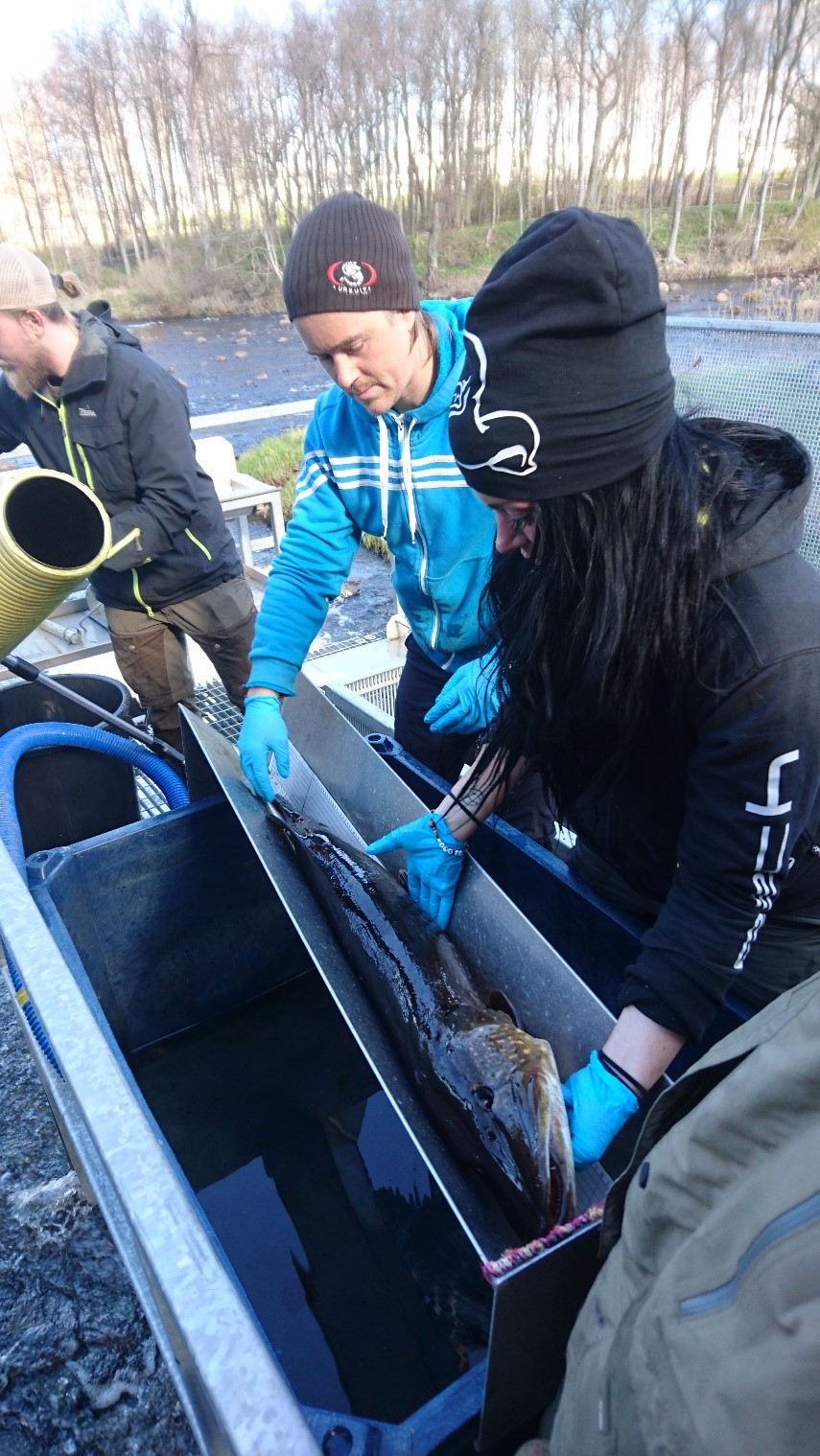
Mätning av Jessica Dolk och Niclas Carlsson av den stora gäddan som fångades i Wolf-trapen. Edvin Rapp ansvarade för protokollföringen.

kurs8

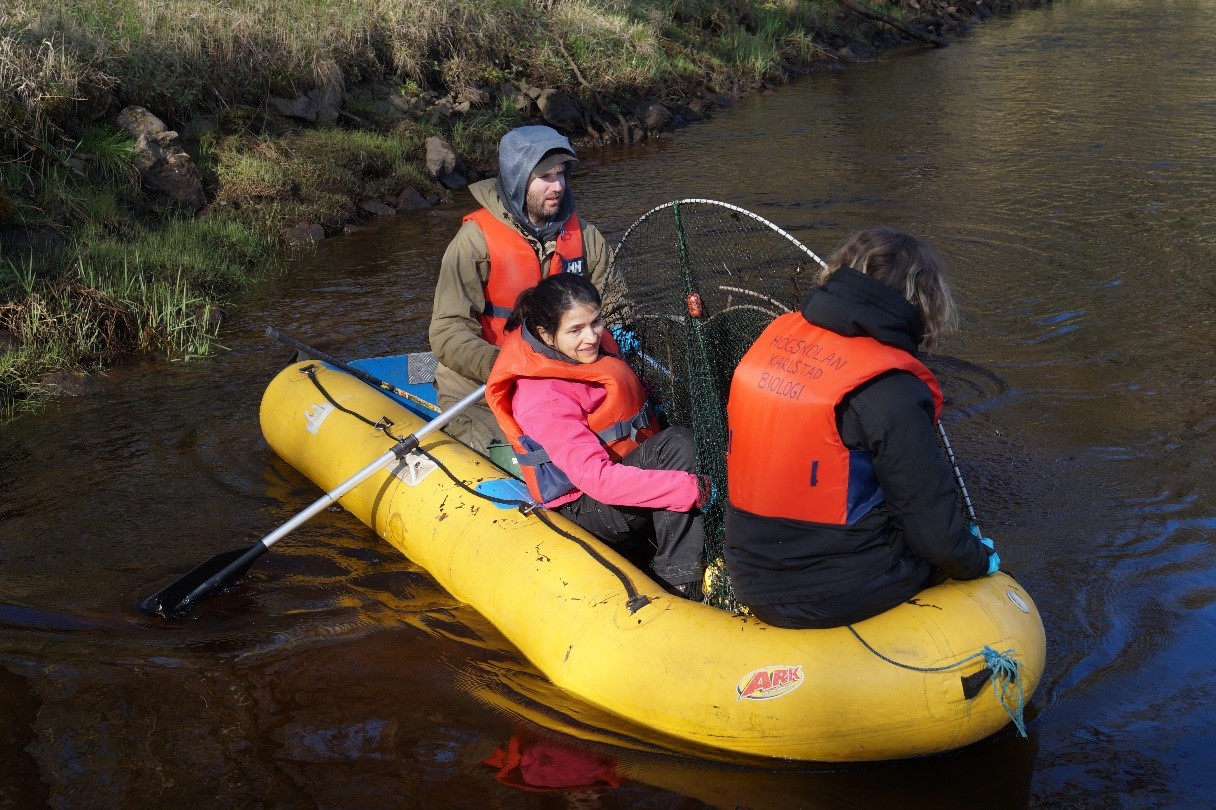
Sara Brodin, Geni Zanol och Jonas Elghagen vittjar och tar upp ryssor som var en av stationerna

kurs7

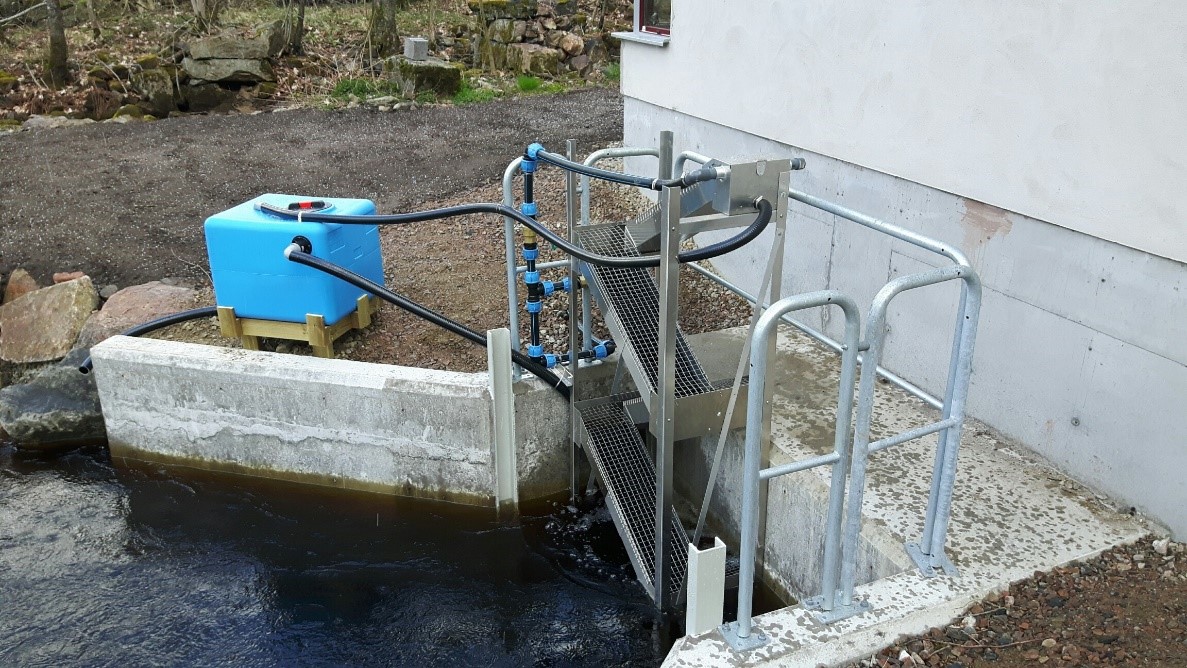
Ålyngeluppsamlare hos kraftverket i Vebro.

kurs

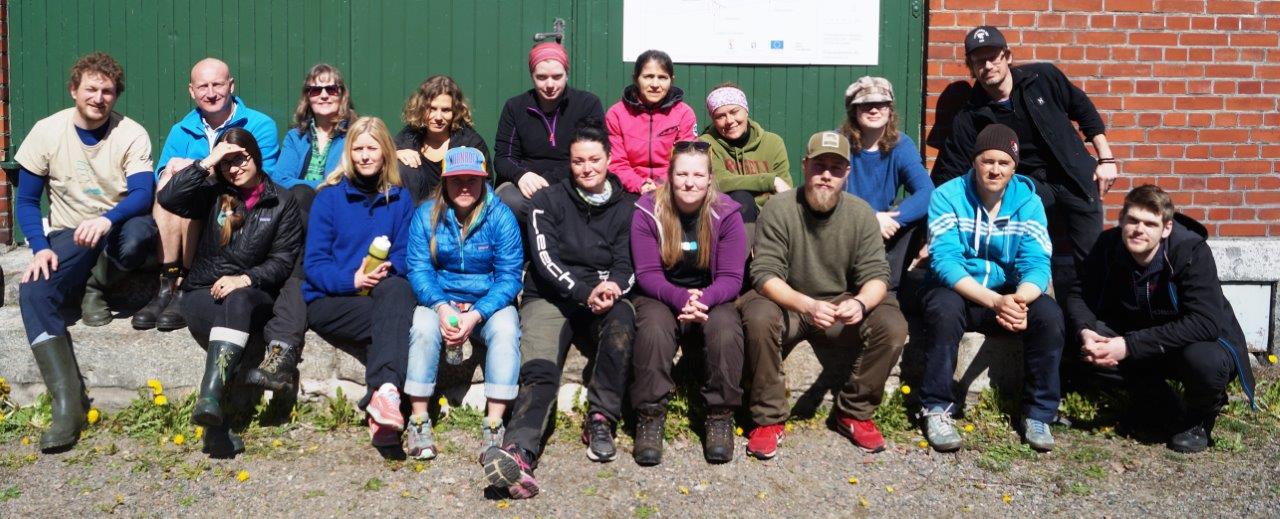
Hela gänget – studenter och lärare.

On Tuesday, 18 April, Victoria Pritchard from the University of Turku, will give a seminar on “Conservation Genomics of Atlantic Salmon”. The seminar will be given at 13:30 in room 5F416 at Karlstad University.

Victoria has worked in the UK, USA, and Finland, and has published over 20 articles in leading conservation, evolutionary and fisheries journals. Everyone is welcome to attend the seminar.

The new journal The Ecological Citizen aims to advance ecological knowledge, champion earth-centered action and promote ecocentrism in political debate. NRRV member John Piccolo recommends the journal as somewhere you’ll find much interesting reading about human relationships with nature. John is also a co-author of a recently published signable statement in support of ecocentric value that he urges our readers to read and consider signing. Access the statement here: Statement of Commitment to Ecocentrism. 

Also, related to the ecocentric debate, there is an ongoing survey of attitudes to conservation. Learn more and take the survey at www.futureconservation.org.

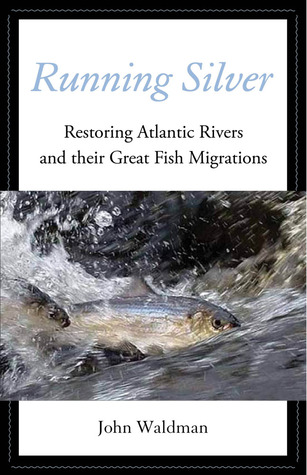
running_silver“Running Silver – Restoring Atlantic Rivers and Their Great Fish Migration” by John Waldman is a book about the history and future of anadromous fish in the Eastern United States. The books’s main characters are Atlantic salmon, alewife, blueback herring, American shad, striped bass, sea lamprey, Atlantic sturgeon, and American eel. The eel migrates from freshwater to the sea to spawn, whereas the other species typically migrate in the other direction – from feeding areas at sea to spawning areas in freshwater.

The author uses historical records, interviews, scientific literature and personal experiences to tell the story of the migrating fish. He describes the ecology and behavior of the migrating fish but also their great historical abundances, and high social and economic importance. He describes the decline of the populations of migrating fish due to dam building, habitat loss, fishing, and pollution, but also the modern day restoration efforts. The fish are put in a social context with stories about conflicts concerning dams and fish passage dating back several hundred years. Meetings with scientists and manager occur frequently in the book, contributing to the story and providing several inspiring portraits of fish ecologists.

The book is essential reading for anyone working with migrating fish and an important book for those interested in fish and our natural world. The book is a call to action for a future with healthy migrating fish populations. Read a short review here and borrow the book from a  well-stocked library.


Short film: The hyporheic zone

Posted by Daniel Nyqvist | Nyheter

The hyporheic zone –  the region beneath the river bottom – is home to a wide range of minute life forms and processes of high importance for the ecology of the river. Learn more in the short film Secret Life of Rivers: