Tomorrow (Tuesday), February 28, David Aldvén from the University of Gothenburg and Vattenfall AB, will give a seminar titled ”Downstream migration of anadromous brown trout”. David Aldvén finished his PhD with a thesis titled ”Migration in anadromous brown trout”. The frame of his thesis is available online here.

The seminar will be given at 13:30 in room 5F416 on Karlstad University. Everyone is welcome to attend!


Last Tuesday, Ewa Orlikowska, PhD-student at Swedish University of Agricultural Sciences, gave a seminar titled “Gaps in ecological research on the world’s largest internationally coordinated network of protected areas: A review of Natura 2000” at Karlstad University. The seminar is available online upon request. Send an e-mail to john.piccolo@kau.se to get access to the seminar.

The papers Gaps in ecological research on the world’s largest internationally coordinated network of protected areas: A review of Natura 2000 and Contribution of social science to large scale biodiversity conservation: A review of research about the Natura 2000 network, both by Orlikowska et al. relate to the seminar content.

natura2000

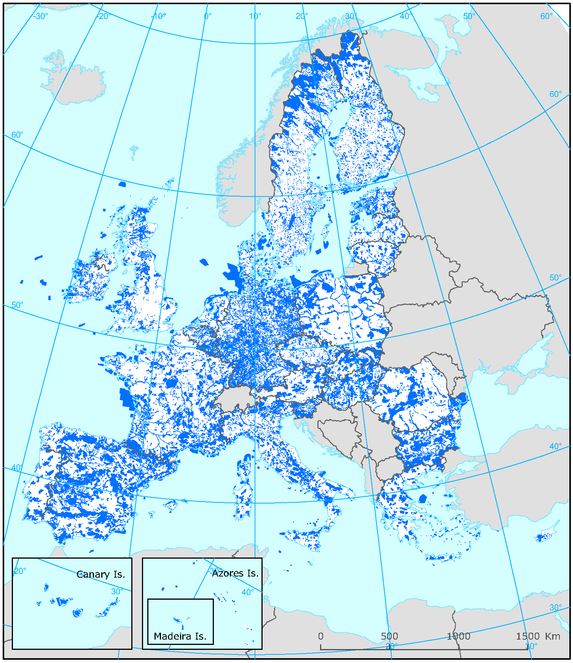
Natura 2000 sites. Map from European Environment Agency.

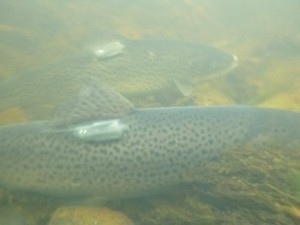
tagged

Radiotagged migrating brown trout.

Next week, Daniel Nyqvist, PhD-student at Karlstad University, will defend his (my…) thesis “Atlantic salmon in regulated rivers: migration, dam passage, and fish behavior”. The defense will take place on Friday, December 9th, at 10:15 in room 9C 203 on Karlstad University. The abstract and the frame of the thesis are available online here.

Scott Hinch (University of British Columbia, Canada) is the opponent and Eva Thorstad (NINA, Norway), Kim Aarestrup (DTU AQUA, Denmark) and Hans Lundqvist (Swedish University of Agriculture) constitute the grading committee (betygskommitté). The visiting researchers will give seminars at Karlstad University on Thursday, December 8th. The seminars start at 14:15 in room 5F322:

Scott Hinch: Using telemetry in adaptive management experiments at fish passage facilities

Eva Thorstad: New results on downstream migration of eel and salmon past power stations in Germany

Hans Lundqvist: Wild Baltic stocks of Atlantic salmon in northern Sweden: Where are we and where are we going in Umeälven?

Kim Aarestrup has yet to disclose the title of his seminar.

Everyone is welcome to attend both the PhD-defense and the seminars.

Nors – föredrag och foton

Posted by Daniel Nyqvist | Nyheter

Norsfiskar (Osmeridae) finns över stora delar av norra halvklotet, både sötvatten och i havet. På många platser migrerar de i stora antal upp i älvarna för att leka och efter lek driftar ägg och larver nedströms, tillbaka mot sjön eller havet.

I föredraget “Biology of eulachon in the Fraser River: critical knowledge gaps” presenterar Doug Hay forskning om Eulachon (Thaleichthys pacificus), norsen på den nordamerikanska Stillahavs kusten. Han pratar bland annat om beståndsuppskattningar baserade på fångst av driftande ägg/larver och möjliga telemetriundersöknignar. Se föredraget här:

YouTube Preview Image

Vår egen nors (Osmerus eperlanus) i Vänern övervakas ute i sjön medan kunskaperna om fiskens berömda lekvandringar är relativt begränsade. Läs om norsbeståndet i Vänerns Vattenvårdsförbunds årsskrift.

Vackra foton på Rainbow smelt (Osmerus mordax, en annan norsfisk) från östra Nordamerika finns här: P.E.I. smelt run caught on camera by Ph.D. student Sean Landsman.

On Tuesday, October 18, Ryan Sponseller, from Umeå University, will give a seminar titled “Land-water interactions and stream ecosystem dynamics in northern boreal landscapes”.

Ryan Sponseller describes his research: “My research focuses on the controls over ecosystem structure and functioning in streams, rivers, and watersheds. We study these systems to understand their condition as natural resources, and as models to test general ecological and biogeochemical principles. This work employs a number of different tools and approaches, including long-term watershed monitoring, the use of isotopic tracers, and field studies of productivity and nutrient dynamics in aquatic habitats. 

One current set of projects in my lab evaluates how ecological changes in terrestrial environments shape the productivity of streams and rivers through controls over habitat conditions (e.g., light) and the availability of carbon (C), nitrogen (N) and phosphorus (P) to aquatic food webs. Applications of this work include understanding the impacts of land use (e.g., forestry) and climate change on freshwater habitats in boreal and sub-arctic landscapes. At the same time, we also pursue basic questions about how light, organic energy, and resource limitation interact to govern biotic structure, productivity, and nutrient use in aquatic systems.

A second component of my research program asks how and why terrestrial environments retain (or lose) important resources. We focus on hydrologic export of nutrients to streams and rivers, with particular attention to nitrogen (N), which limits the productivity of terrestrial and aquatic habitats in northern Sweden, and is one cause of eutrophication in the Baltic Sea. The drivers of material export from land vary with scale. At small scales, our research addresses basic questions about the role of landscape heterogeneity and hydrologic routing as factors that determine patterns of N export from headwater catchments. At broader and longer scales, current work explores how long-term (multi-decadal) changes in land management and climate are altering N storage and export across boreal and subarctic Sweden.”

The seminar will be given at 13:30 in room 5F416 on Karlstad University. Everyone is welcome to attend!
On Friday, 21 September, Stan Gregory from Oregon State University will give a seminar titled “Population dynamics of coastal cutthroat trout and Pacific giant salamanders in old-growth forest and second-growth forest reaches of a Cascade Mountain stream in Oregon, USA”. The seminar will be given at 15:00 in room 5F416 at Karlstad University.

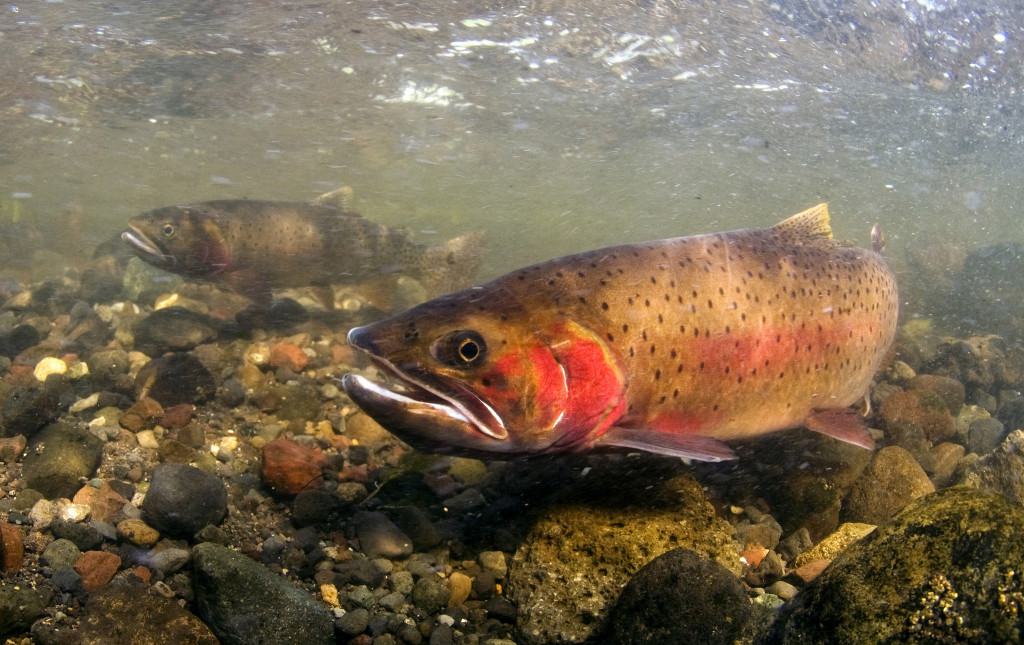
cutthroat

Spawning cutthroat trout (photo: Yellowstone National Park).

Stan Gregory is in Karlstad as the opponent at Åsa Enfalks PhD defense. Åsa Enefalk will defend her thesis ”Fine stream wood – Effects on drift and brown trout (Salmo trutta) growth and behavior”  at 10:15 on the same day (Friday 21 September) in Nyquistsalen (room 9C 203) at Karlstad Univeristy.

Everyone is welcome to attend both events!

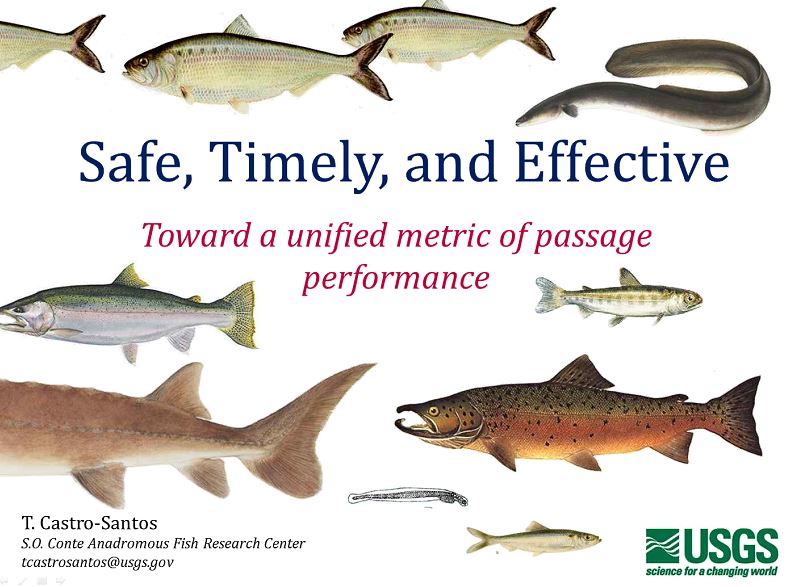
Last week, Theodore Castro-Santos from Conte Anadromous Fish Research Center (USGS) gave a webinar titled “Safe, Timely, and Effective: toward a unified metric of passage performance” on the World Fish Migration Platform. The webinar was also streamed live at the Congress of the Iberian Society of Ichthyology, The webinar is now available online (after free registration) at the World Fish Migration Platform here (follow the link at the bottom of the page).

ted

On Thursday, June 9, Ian Cowx, from University of Hull, will give a seminar titled “Paradigm shifts in freshwater fish conservation: moving to the ecosystem services concept. The seminar will be given at 14:15 in room 5F416 on Karlstad University.

Earlier during the same day, Anders Andersson, PhD-student at Karlstad University, will defend his licentiate thesis titled “Catch and effort from a recreational trolling fishery in a large lake”. Ian Cowx will be Anders opponent during the defense. The defense will take place at 10:15 in Room 9C203 at Karlstad University. Anders thesis is available here.

Everyone is welcome to attend both events!

frog

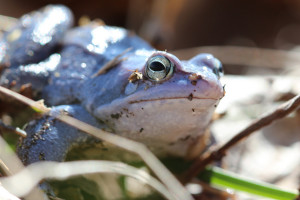
Moor frog (Rana arvalis), photo by Mumes World.

On Tuesday, May 3, Anssi Laurila, from Uppsala University, will give a seminar titled “How to cope with environmental variation: a frog’s eye view on adaptive solutions”.  

Here, Anssi Laurila describes his own research: “I work at the interface between ecology and evolutionary biology on factors allowing and maintaining phenotypic and genetic variation. Much of my research focuses on the roles of phenotypic plasticity and local adaptation in explaining phenotypic and genetic variation along environmental gradients. Within this theme, I am focusing on both large-scale (latitudinal) and small-scale climatic variation as well as other forms of environmental stress (acidification, disease) in explaining these patterns using amphibians and snails as models.”

The seminar will be given at 13:30 in room 5F416 on Karlstad University. Everyone is welcome to attend!