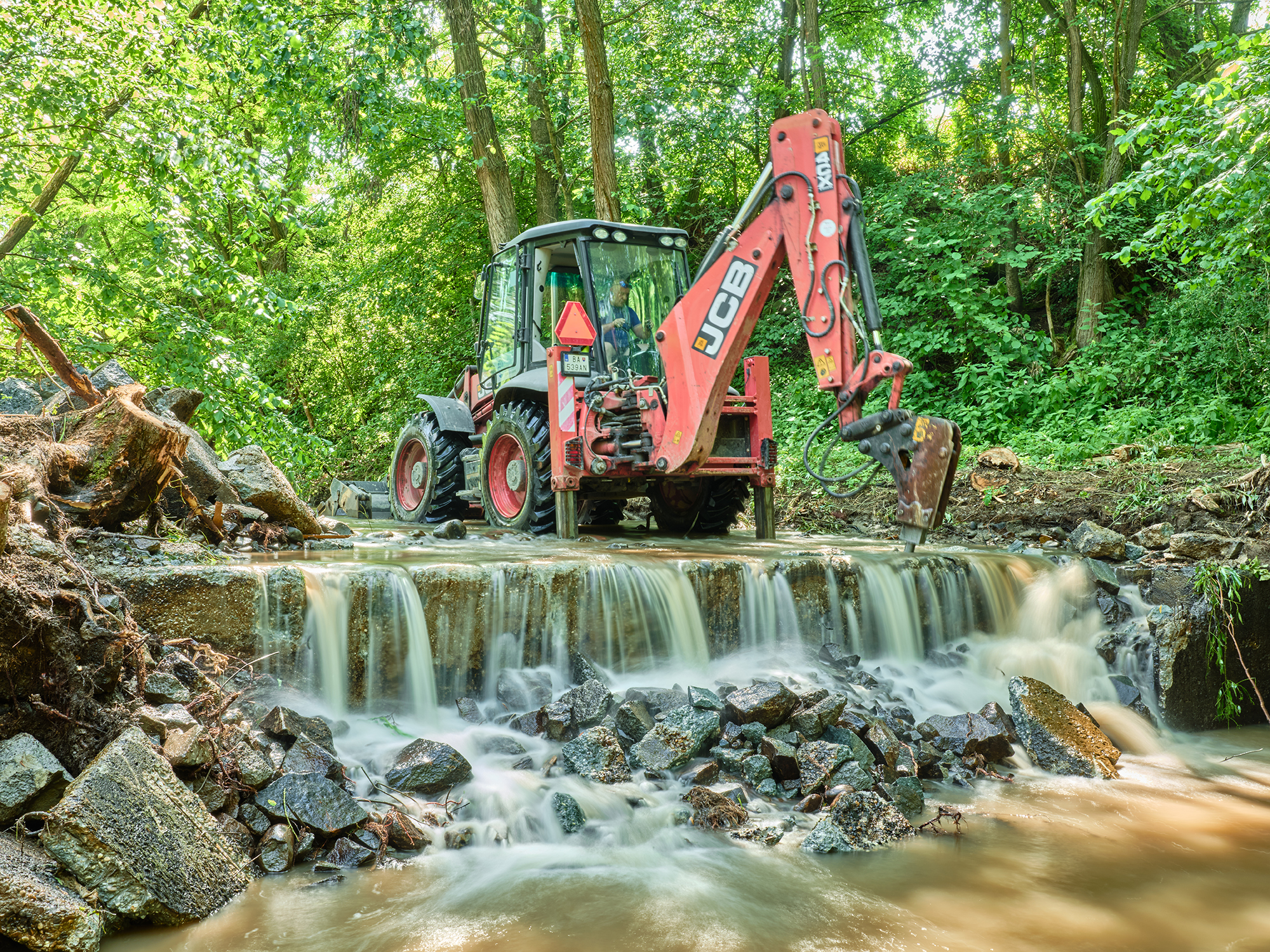
Sebastian Rock, a LIFEConnects funded Ph.D. candidate at RivEM, will be giving a seminar on the impacts of parasitic Unionid mussels on their host fishes! These incredibly endangered freshwater bivalves are considered keystone species in their native ecosystems and are heavily protected, but will the returning salmon be able to survive in an ecosystem full of parasites? Will local anglers be upset with the habitat restoration efforts because their favorite fish are now less healthy than they were before? To find out the answers to all these questions and more! Join the seminar live on zoom https://kau-se.zoom.us/my/kaubiology at 1315 CET on 22nd February 2022.
Jacqueline Hoppenreijs, Lutz Eckstein and Lovisa Lind have a new paper out! It describes the different pressures of human activities on boreal riparian vegetation. They collected information from 182 scientific papers, books and reports and found that there are factors that are already damaging many rivers, such as hydropower (Figure 1), and factors that will become more important in the future, such as the climate crisis. More importantly, they found that these and other processes interact in ways that we don’t understand yet, simply because they’ve hardly been studied.
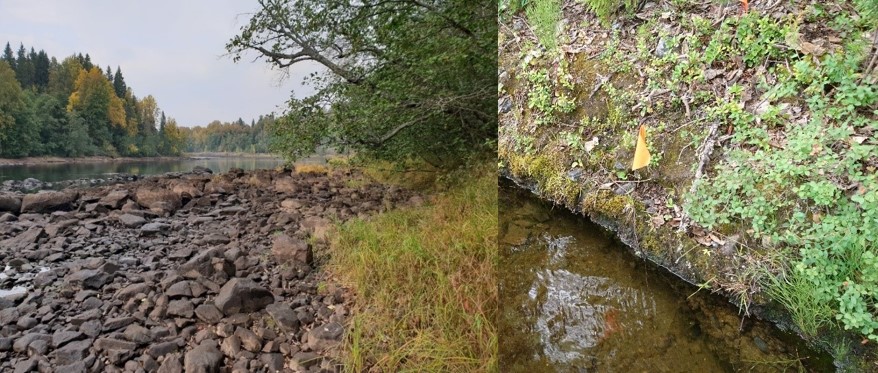
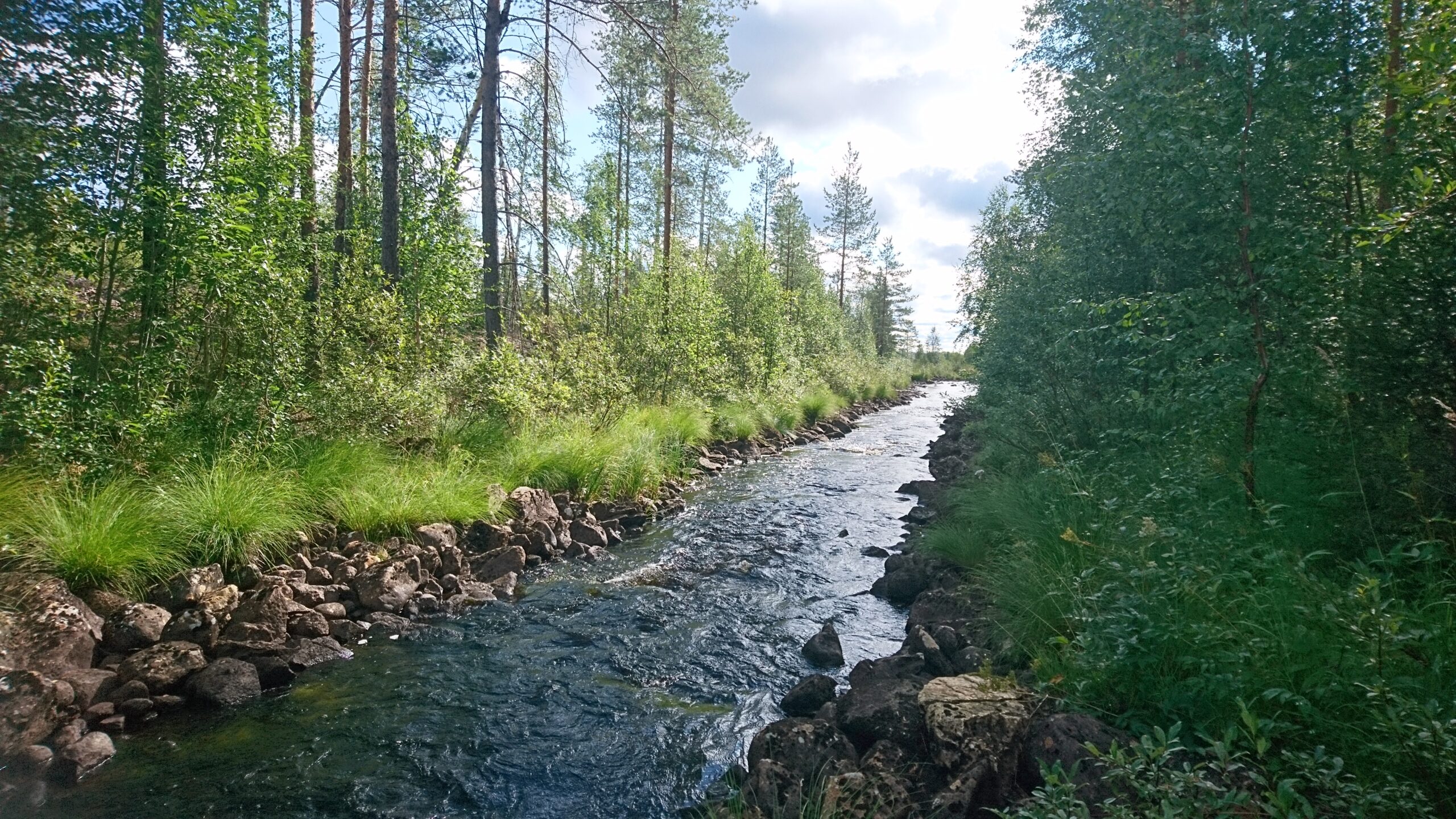
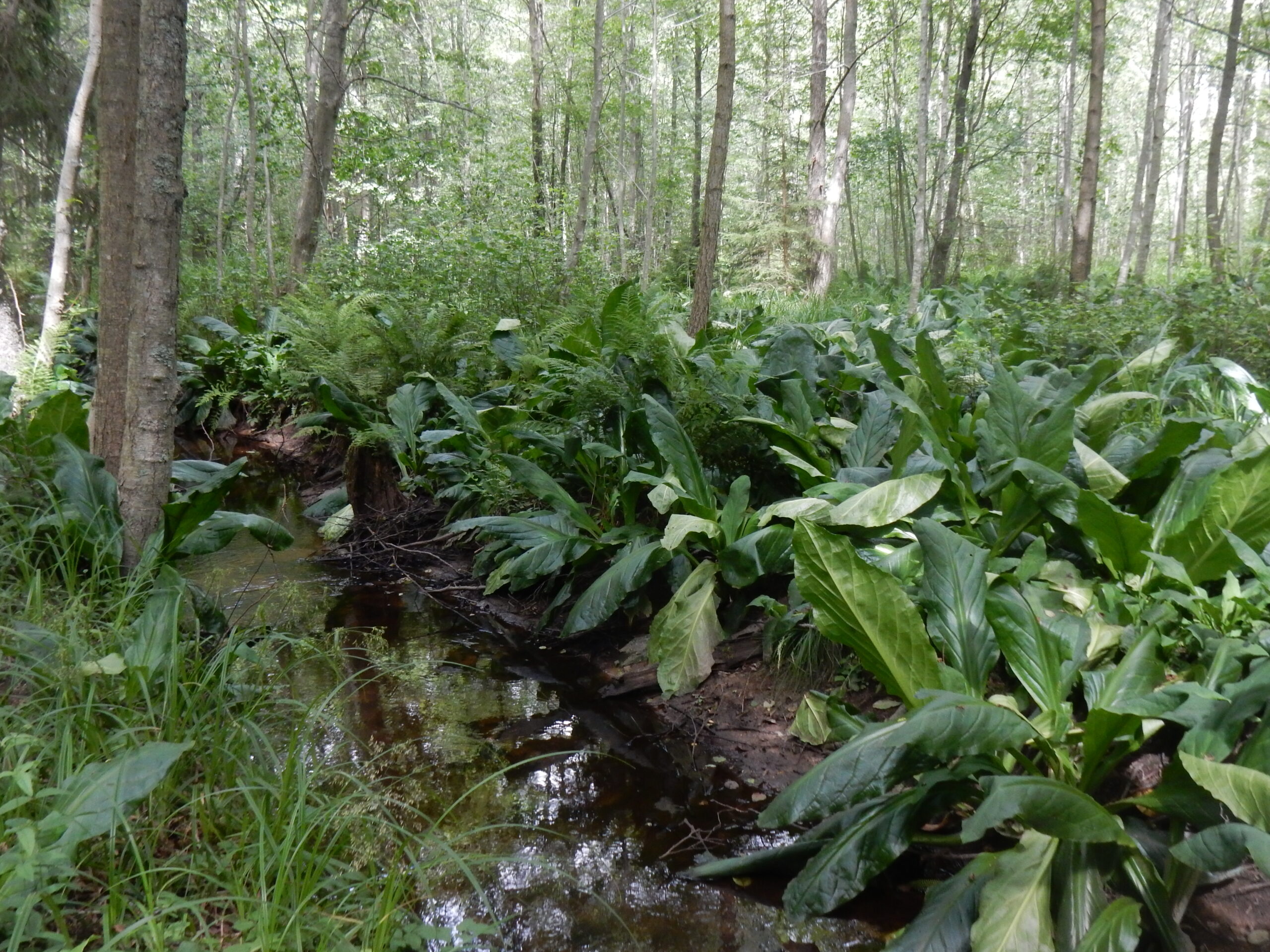
Figure 1. Rivers in boreal Sweden that are regulated for hydropower, channelized for timber floating and a riparian zone inhabited by an invasive species. Photo by Lovisa Lind, Jacqueline Hoppenreijs and Owe Nilsson
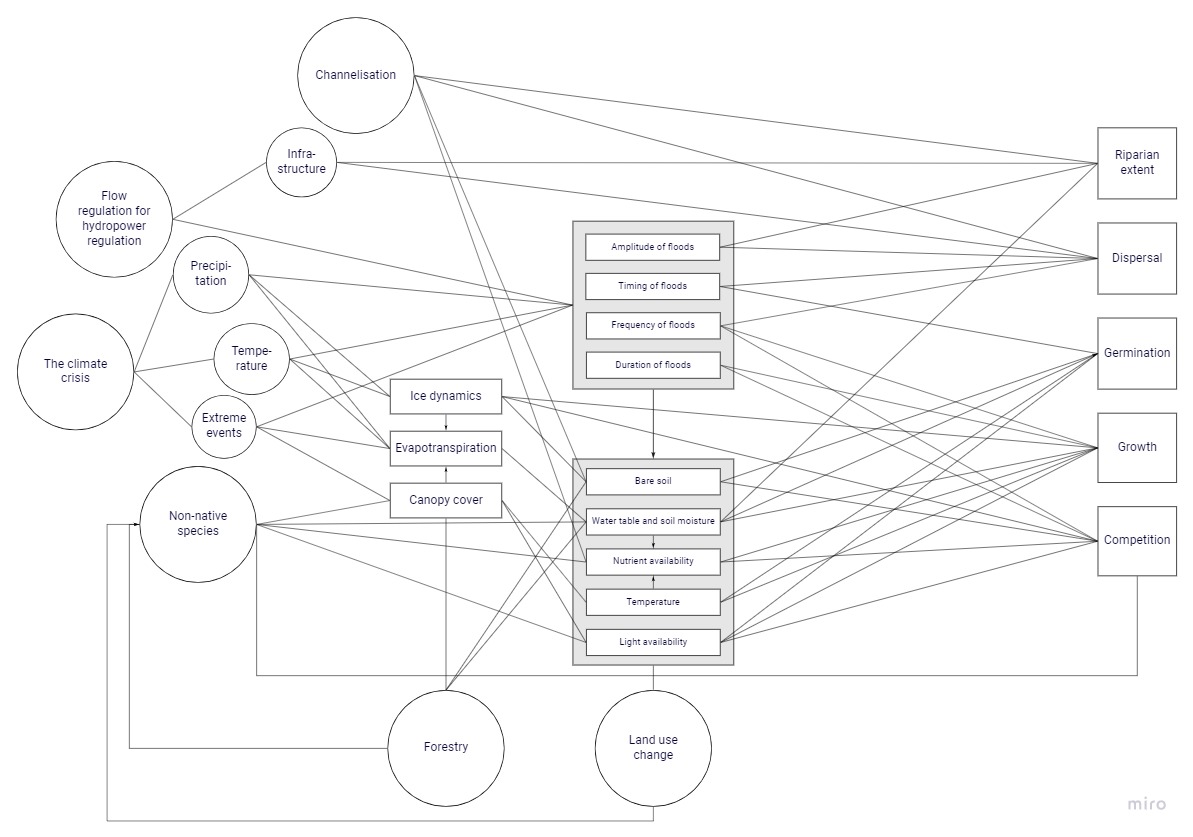
They combined all the effects of the pressures in one conceptual model (Figure 2), to help researchers, managers and everyone else who might be interested to ask more relevant research questions and balance different management measures with each other, so that riparian zones and the land and water around them can be protected better. The full paper is accessible through https://www.frontiersin.org/articles/10.3389/fevo.2021.806130/full#h6.
Figure 2. Conceptual model as developed in the paper http://doi.org/10.3389/fevo.2021.806130
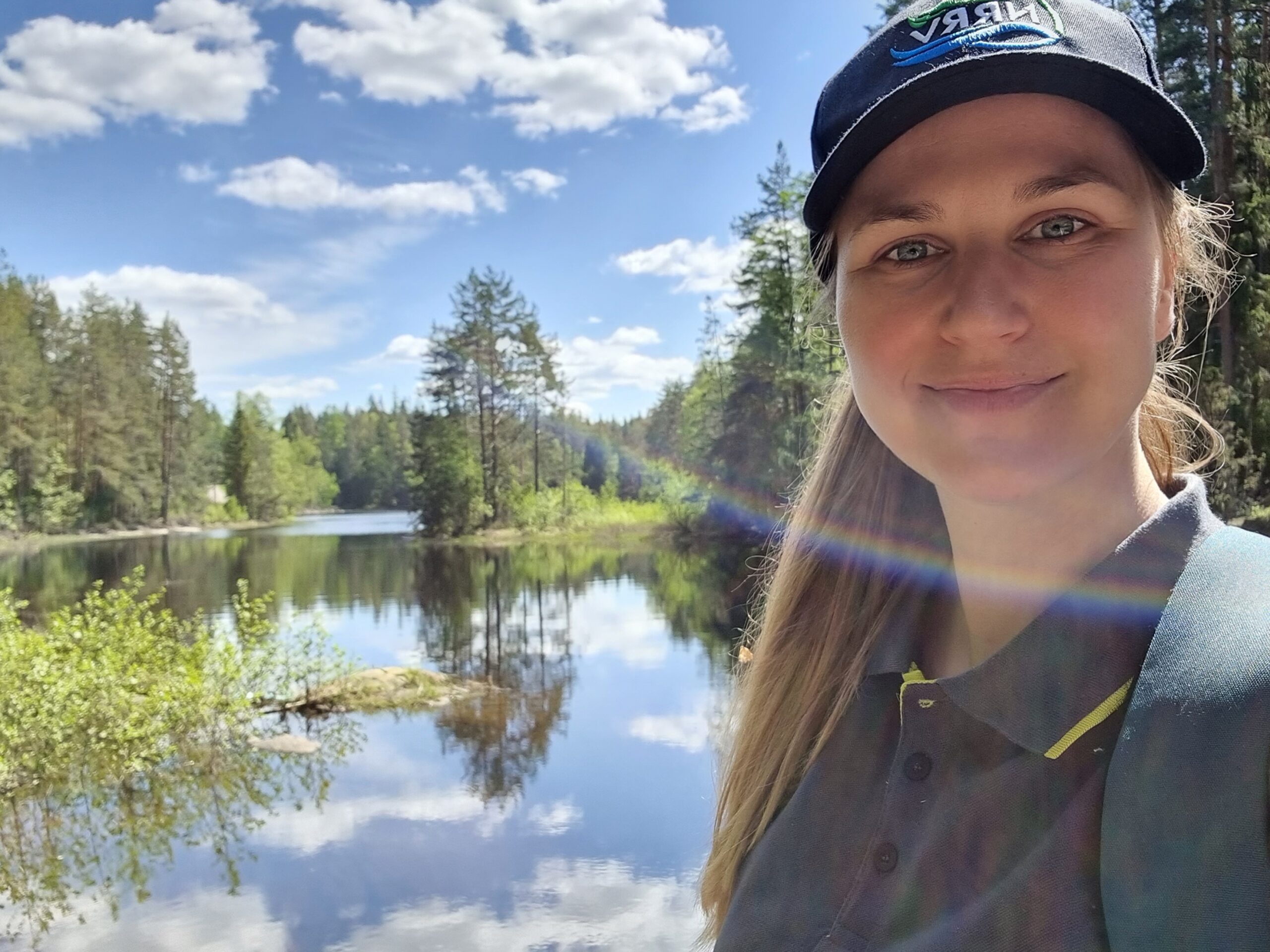
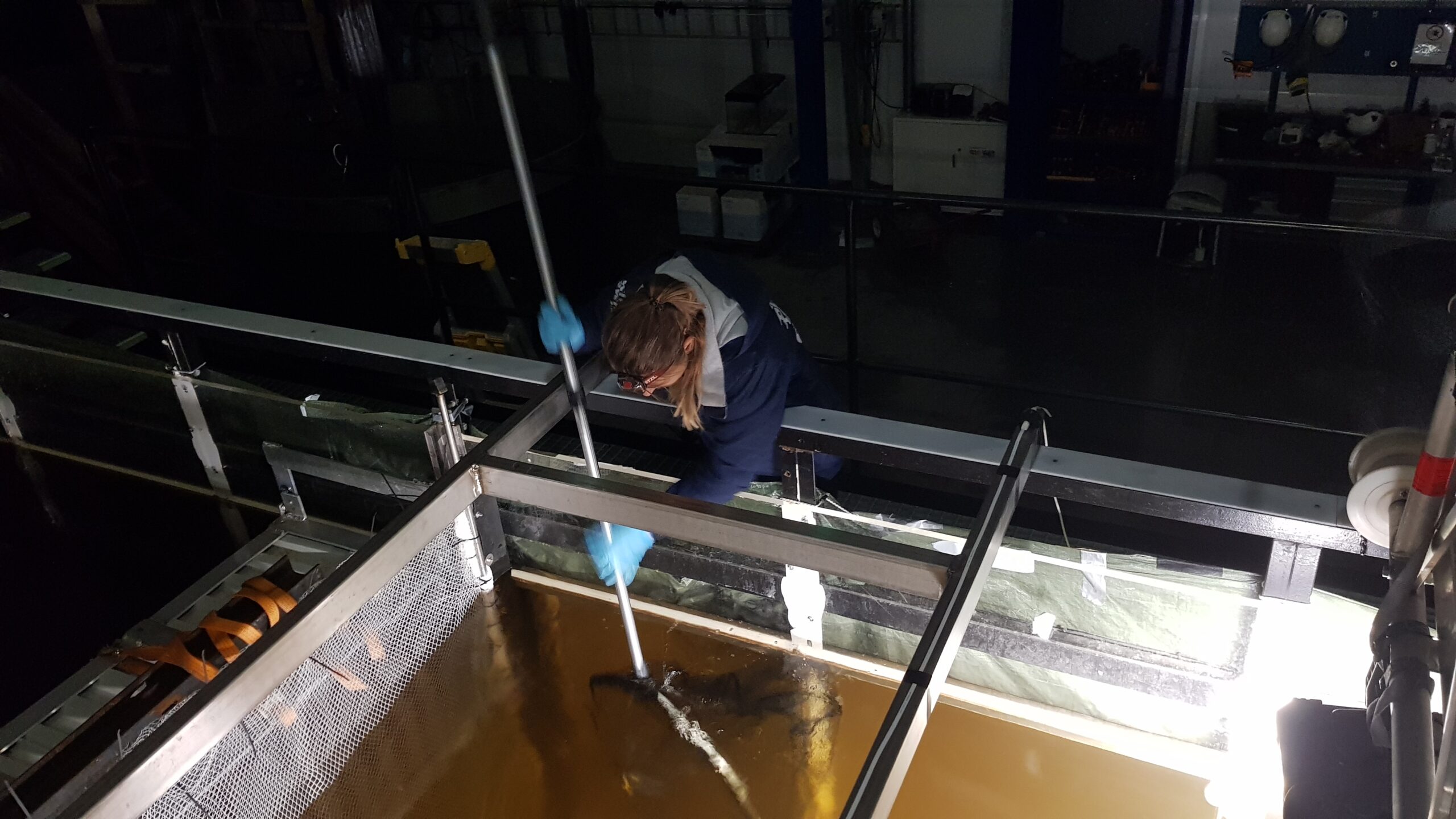
A picture of Velizara (on the left) and her lab work (on the right) at the Älvkarleby flume, Sweden
Velizara Stoilova (RivEM and Norconsult’s industry Ph.D. student) from the biology department of Karlstad University will be giving a seminar about her ongoing doctoral research entitled Existing approaches to facilitate downstream migrating fish. Velizara mainly works on solutions for fish migration and connectivity of rivers impacted by dams. As the title suggests, Velizara will be giving a talk on existing approaches to facilitate downstream migrating fish in rivers with limited connectivity and outlining her planned research.
This seminar will be streamed live on zoom on the 18th of January at 13.15 (CET). To join the seminar live on zoom, use the link https://kau-se.zoom.us/my/kaubiology. You are all welcome.
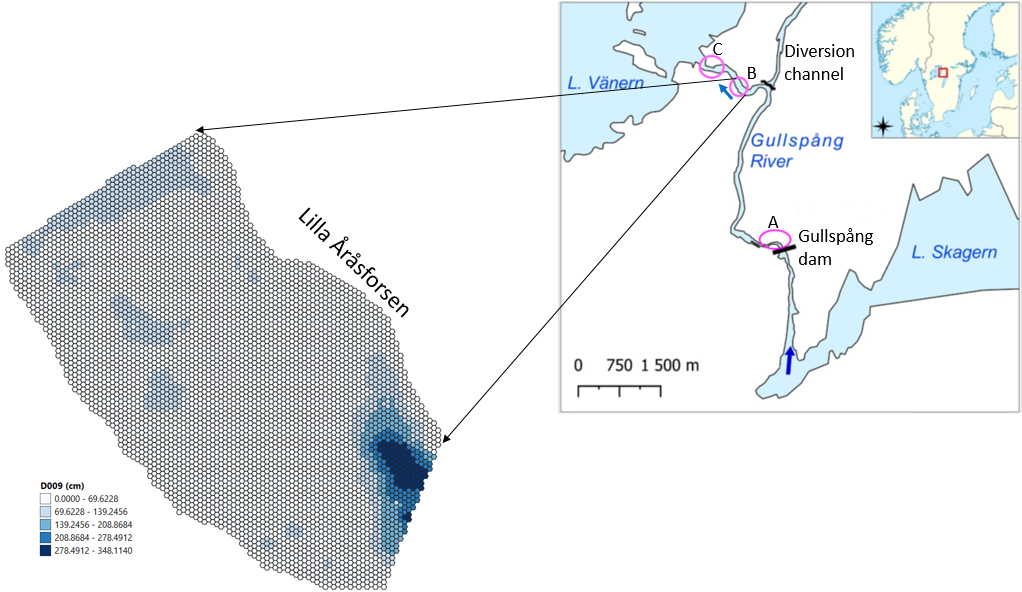
Dr. Mahboobeh Hajiesmaeli, a PostDoc Researcher from Karlstad University’s biology department and a member of the River Ecology and Management (RivEM) group will be giving a talk on how individual-based models (IBMs) of salmonid populations can be used as an effective tool for understanding and managing fish population responses to hydropeaking (hydropower short-term regulation) practices. The main focus is on the first application of an individual-based model, inSTREAM 7.2-SD, to assess the effects of peaking flows on growth, survival and distribution of Atlantic salmon (Salmo Salar) and brown trout (Salmo trutta) in the lower Gullspång River, Sweden. Lilla Åråsforsen (see picture below) was used as the study site for the IBM modeling.
Lilla Åråsforsen (Gullspång River, Sweden) and habitat cells of the study reach created with QGIS to be used as input into the inSTREAM model
This seminar will be streamed live on zoom on the 21st December at 13.15 (CET) at the link https://kau-se.zoom.us/my/kaubiology
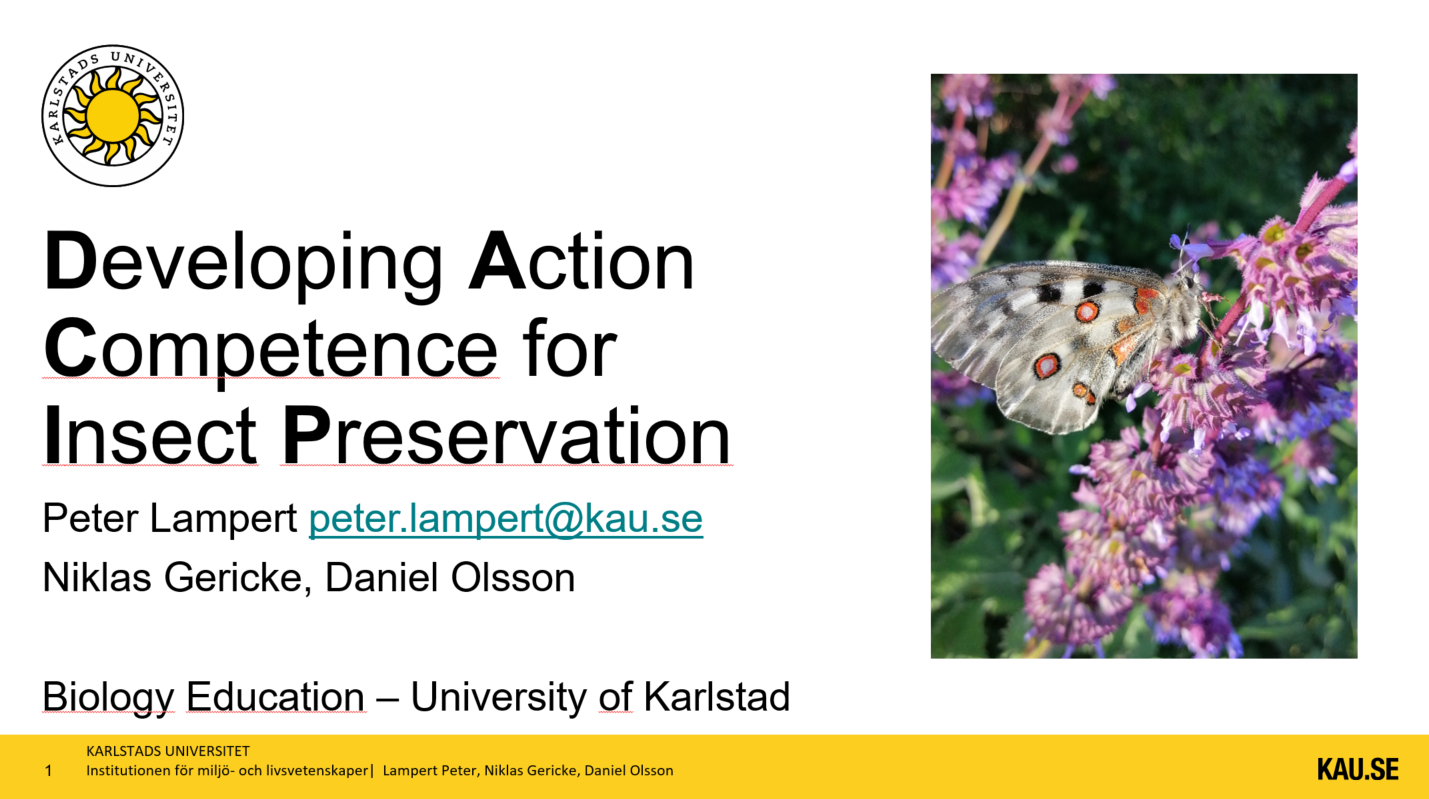
Peter Lampert, a post-doctoral researcher from the didactics group of Karlstad University’s Biology department will give a seminar entitled Developing Action Competence for Insect Preservation (DACIP): An educational research project promoting young citizens competences to take action for insects. The seminar will be streamed live on zoom on 14 December at 13.15 (CET). You are welcome to join the seminar through https://kau-se.zoom.us/my/kaubiology.
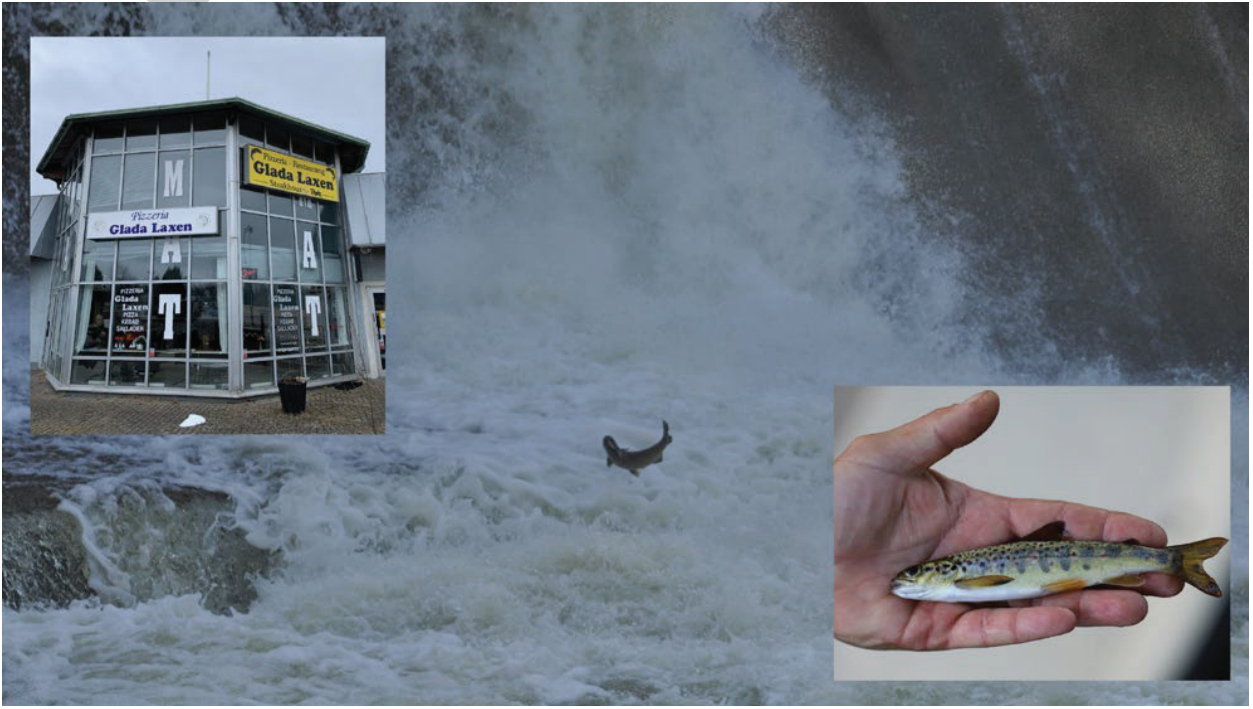
A landlocked Atlantic salmon spawner leaping in the rapids of the River Gullspång, Sweden, just below the hydroelectric dam that has been a complete migration barrier since the early 1900s (Lund Bjørnås et al., 2021)
Associate Professor Johan Watz from Karlstad University’s River Ecology Management Research Group (RivEm) and others have recently published a review article entitled Atlantic salmon in regulated rivers: Understanding river management through the ecosystem services lens. The authors synthesized peer-reviewed literature (related to the effects of hydropower on ecosystem services of Atlantic salmon in regulated rivers throughout its native range) to understand how Atlantic salmon conservation has been addressed within the ecosystem services framework. The paper is published open access and can be found at:https://onlinelibrary.wiley.com/doi/full/10.1111/faf.12628
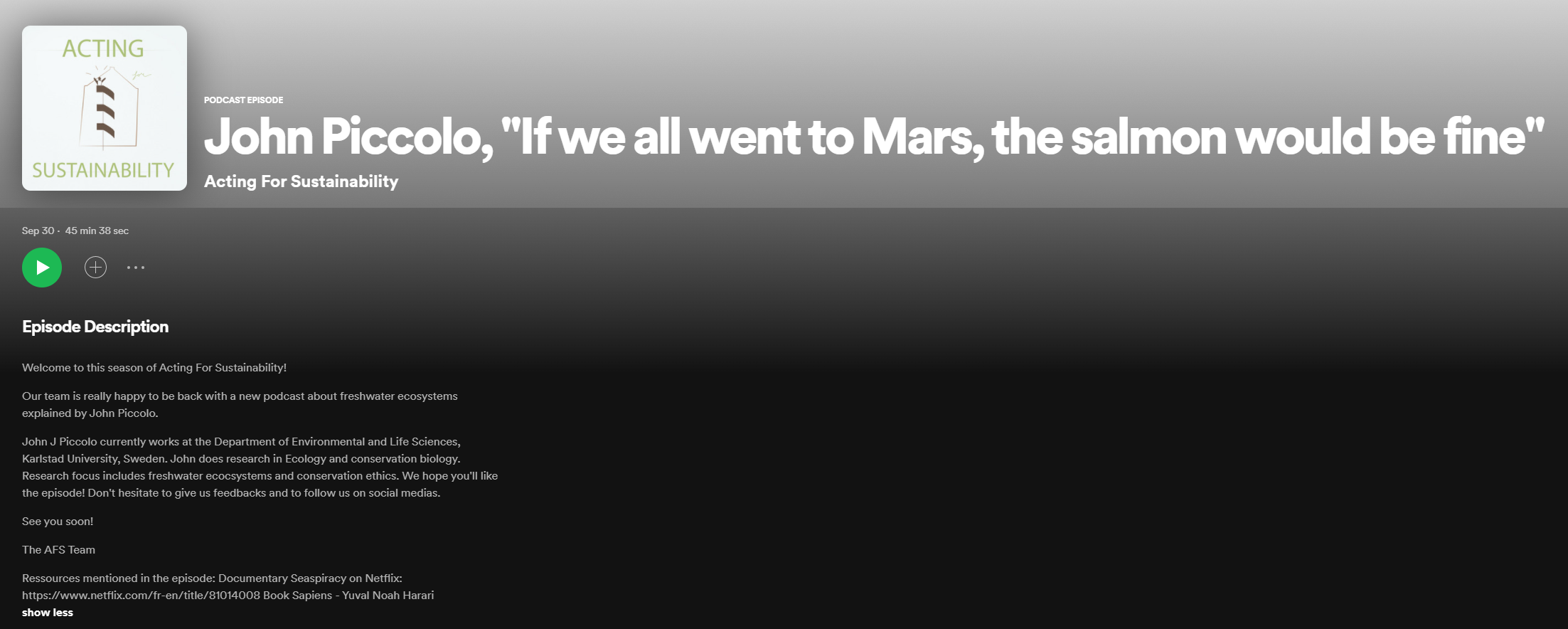
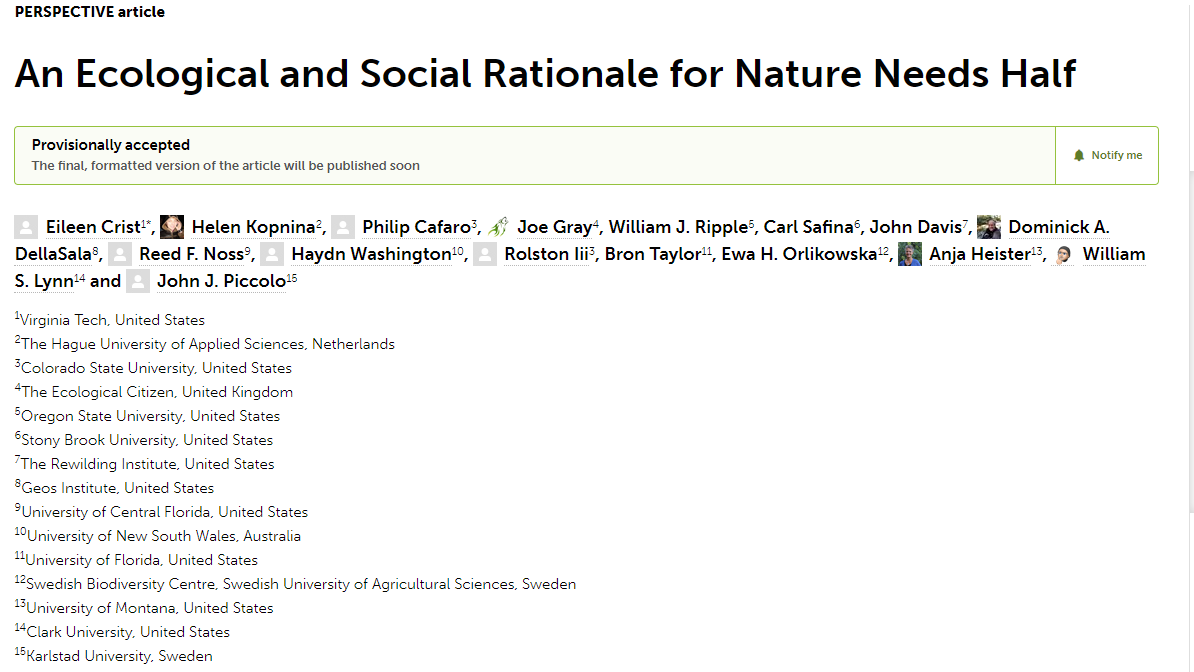
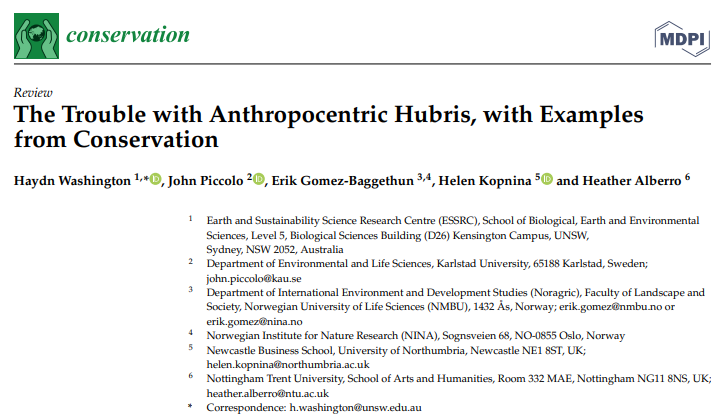
Professor John Piccolo was involved in two recently published articles and a podcast about ecological sustainability. The two articles and the podcast are part of a larger project on ecological sustainability that John is part of, with researchers from around the globe.
The focus of the research is on sustaining biodiversity in social-ecological systems, and on understanding social and ecological values. Upcoming events include a webinar organized by the Society for Conservation Biology Europe Section https://conbio.org/groups/sections/europe/activities-fall-2021-webinar-series/ And the 2022 European Congress for Conservation Biology (ECCB) in Prague, Czech Republic: https://www.eccb2022.eu/ The network is always interested in developing new partnerships, so feel free to contact John (john.piccolo@kau.se.) if you are interested.
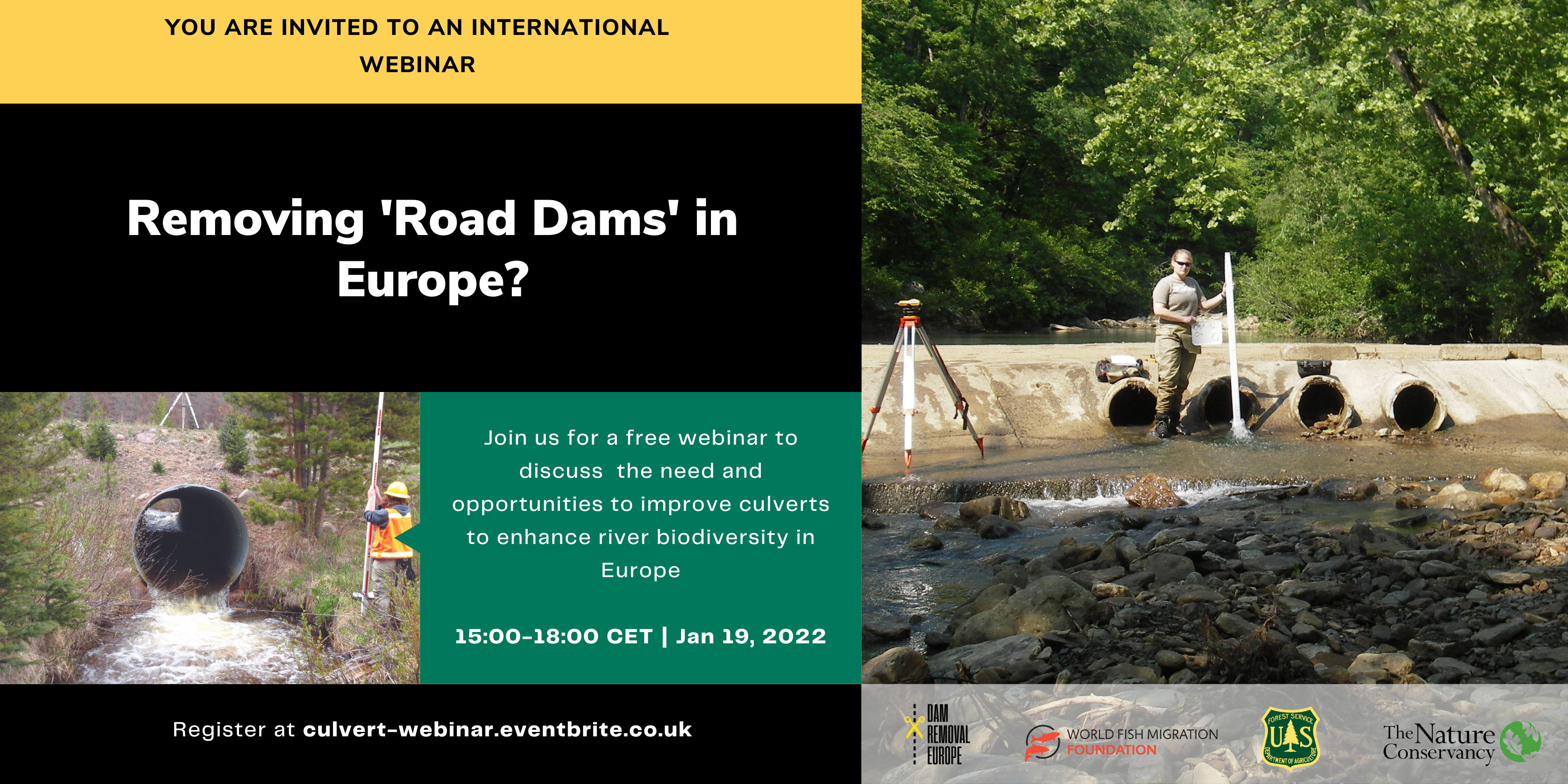
The US Forest Service, The Nature Conservancy, and The World Fish Migration Foundation invite you to save the date and register for an exciting upcoming webinar entitled: Removing “Road Dams” in Europe? taking place on 19th January, 2022 from 15:00-18:00 CET.
This is a free, international webinar that will highlight the need and opportunities to improve road and stream crossings to enhance the biodiversity of rivers across Europe!
We invite all river and restoration practitioners, policymakers, researchers, and students, as well as road planning, maintenance, design and construction experts to join!
Confirmed speakers include:
Carlos García de Leaniz of Swansea University, Wales | Topic: An overview of Europe’s current policies and research needs
Bob Gubernick of the US Forest Service, USA | Topic: Stream simulation principles and applications in the USA
Sofia Perä, County Administrative Board of Norrbotten, Sweden | Topic: Culverts in Sweden and lessons from the LIFE REMIBAR project
Joshua Royte, Nature Conservancy Maine, USA | Topic: Opening up headwaters in Maine, USA
Nat Gillespie, US Forest Service, USA | Topic: What is the problem with culverts and road-crossings?
The full program, which includes speakers from both Europe and the USA, will be released in the coming month. Make sure to register so you don’t miss any important updates! We hope to see you there.
Sponsor deals for companies: The webinar is additionally open for sponsorship from 6 companies. At this point, we have 5 spots left. For 1,000 euros, companies can show a 30-second commercial video about how they are involved in culvert replacement or the removal of culverts. The logo of sponsors will be shown on Eventbrite, announcement, and conference program. Please contact herman@fishmigration.org for more information about sponsorships.
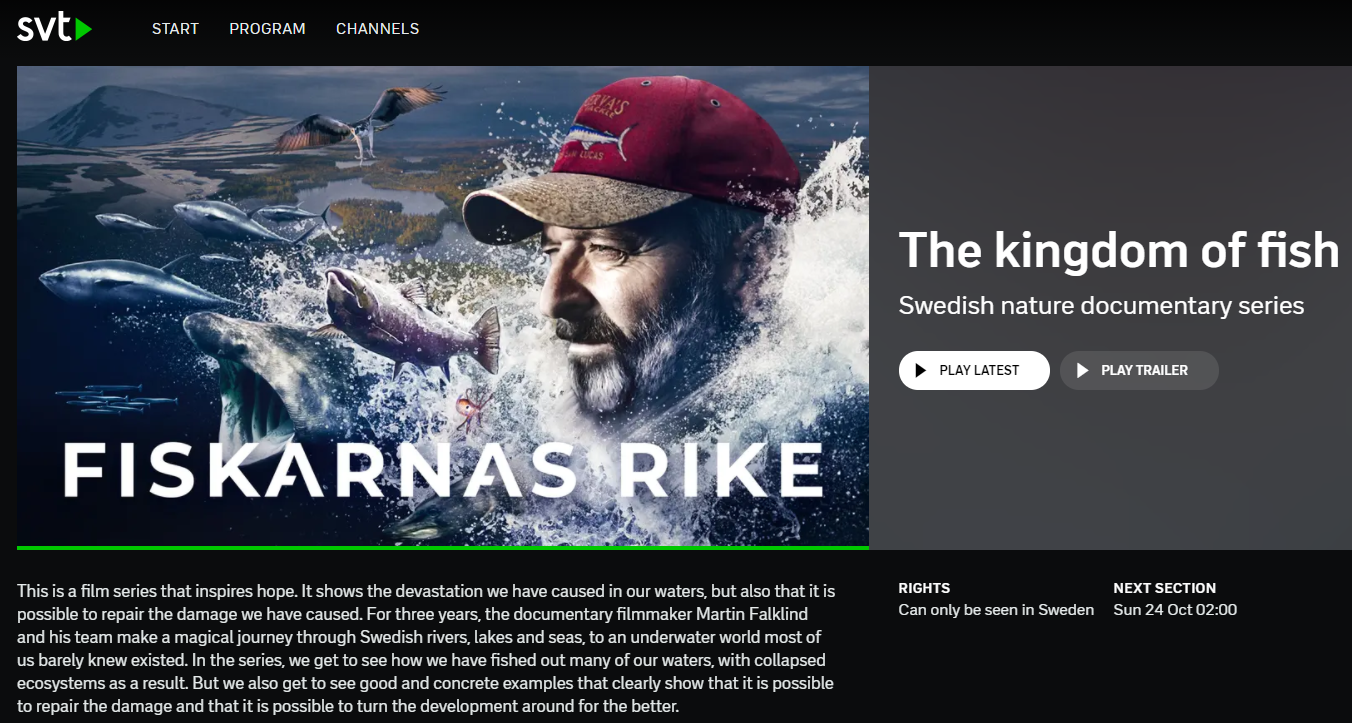
Watch Part 2 of the epic aquatic documentary (part of a trilogy) this Sunday, 24 October, 19.00-20.00 on Swedish National TV (SVT2). This epic aquatic trilogy (the first of its kind on Swedish TV) covers three years of filming work by a team of experts. The team while making this documentary in 2019 spent two days with the University of Karlstads’ master course in river Ätran. Find out more on: https://www.svtplay.se/fiskarnas-rike ¨ https://fiskarnasrike.se/
A snapshot of the trilogy on the websites of Fiskarnasrike (left) and SVTplay (right)
In addition to that, there’s another documentary broadcasted on SVT’s “Kalla fakta” next week (Part 3 THE SEA is broadcast on Sunday 31 October, 19.00-20.00 on SVT2) on “eel conservation”. Watch out for Professor Olle Calles (a lecturer at the University of Karlstad and a member of the River Ecology and management research group) answering very important questions concerning eels.
On Tuesday 28 September 2021, Herman Wanningen, a Ductch aquatic ecologist, entrepreneur specializing in fish migration and water management and founder of the World Fish Migration Foundation and initiator of Dam Removal Europe and Global Swimways, will give a seminar on dam removal as an ecological restoration measure of rivers which have been negatively impacted by the construction and operation of dams. The presentation will highlight how European river managers, inspired by a growing movement, are getting ready to restore rivers by removing dams.
Herman Wanningen
The seminar starts at 13.15 and will be streamed live over Zoom. Contact Olle Calles (olle.calles@kau.se) to receive the zoom link to this seminar.
RivEM – Karlstad University
… is a research group associated to the subject of Biology and the Department of Environmental and Life Sciences at Karlstad University, Sweden. We conduct both basic and applied research on human impact on river ecosystems, and how this impact can be minimized.
In Swedish the research group is called Naturresurs Rinnande vatten (Acronym NRRV, hence the url nrrv.se).