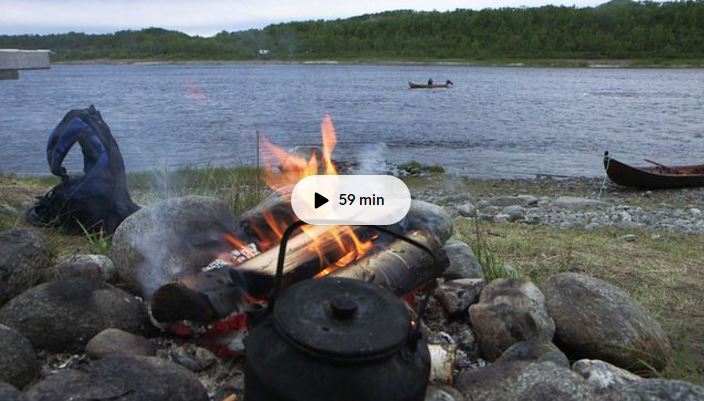
Dokumentären “Tana älv – mellan tre länder” (“Tanaelv – den beste elva” på norska) ligger just nu uppe på SVT-play. FIlmen handlar om laxen i älven och människorna runt den. Forskare, förvaltare, husbehovsfiskare och repressentanter för turistfisket kommer till tals. Älven – och dess biflöden – är hem för en mängd lokalt anpassade laxpopulationer och fisketrycket måste minskas för att skydda hotade laxpopulationer. Detta skapar både lokala och internationella konflikter.

nrk_tana_svt

Se filmen på SVT-Play eller på NRK:s hemsida.

A postdoc position in the ecology of river restoration is open for applications at Karlstad University: “The main duty of the position is to conduct research on the effects of dam removal and the installation of fish-friendly turbines on river connectivity and ecology. Intact river connectivity is essential for many organisms in running water, and especially so for organisms that move between different habitats to complete their life cycle, such as many migratory fish species. Many rivers are modified by dams such as hydroelectric power plants. Dams disconnect river stretches and habitats, thereby reducing dispersal and migration possibilities for fish, benthos, and plants, with negative effects on individuals, populations, and communities. The post-doctoral candidate will be expected to evaluate the effects of complete dam removal and installation of fish-friendly turbines as measures to improve connectivity in rivers.“. The deadline for applying is February 28. Read the full announcement here:

Post-doctoral Research Fellow in Ecology of River Restoration: Dam Removal and fish-friendly Turbine

As advertised previously, NRRV at Karlstad University, also has two additional openings for full-time post-doctoral research fellows and one opening for a PhD-student (deadline February 10). Read full announcements for these positions here:

Post-doctoral Research Fellow in Aquatic-Terrestrial Linkages

Post-doctoral Research Fellow in Ecology of River Connectivity.

PhD position in Global climate change and winter ecology

A PhD-position in the field of global climate change, as it relates to the ecology of stream fishes in winter, is now open for applicants at Karlstad University. The position is a full time position for 4 years within the River Ecology and Management (NRRV) group at the Department of Environmental and Life Sciences. Read more about the position on kau.se.

As advertised previously, NRRV also has two openings for full-time post-doctoral research fellows. One position is in the field of stream-riparian ecology with focus on the reciprocal interactions and linkages between aquatic and terrestrial habitats. The other position is on river connectivity with focus on rehabilitation, management and development strategies. Read full post-doc position announcements here: Post-doctoral Research Fellow in Aquatic-Terrestrial Linkages and Post-doctoral Research Fellow in Ecology of River Connectivity.

John Piccolo, researcher at Karlstad University has written a short story for the Freshwater Working Group of the Society of Conservation Biology about his work in Klarälven. Read the story at the group’s facebook page or here below:

This is a story about some of the toughest field work I’ve carried out in over 20 years of research on salmon populations in either North America or Sweden, and describes the first documentation of a wild Atlantic salmon smolt run on the River Klarälven in central Sweden.

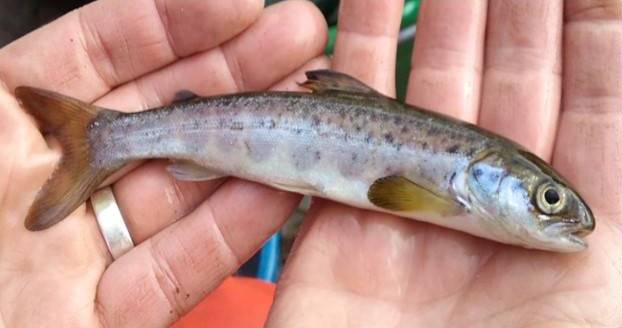
Klarälven is the longest river in Scandinavia, and is home to one of the world’s last remaining large-bodied landlocked Atlantic salmon (pictured) populations. The landlocked salmon migrate from Vänern, the largest lake in the EU, to spawn and rear in Klarälven (learn more about Klarälven here). After living for 2-4 years in the river, the salmon smolt migrate downstream to feed and grow in the lake. Although there has been anecdotal information about the smolt migration for many years, nobody had ever succeeded in trapping them to estimate production. Due to historical fishing pressure, and hydropower development, the Klarälven salmon are believed to be highly-threatened. However, salmon populations could also be recovering in Klarälven, because fishing pressures have reduced, and populations have gone from a low of less than 100 spawning adults to a record return of over 1000 in 2016. With this history in mind, we set out to better our understanding of salmon smolt populations in Klarälven and to guide more successful management and restoration.
piccolo_smolt

A River Klarälven smolt (photo: Teemu Collin).

As many aquatic scientists know, trapping fishes or even invertebrates in rivers can be difficult – they all tend to migrate during rising or falling flows when water levels in the river are high. Keeping a net in the water can be difficult or impossible under such conditions. Months of organic debris that has been deposited along the river banks is suddenly washed into the stream, and nets need to be cleaned often, sometimes hourly 24-hours round. An additional variable in the mix is that in large rivers, organic debris can be large (picture large tree branches or even entire trees!)! High water levels, rapid flows, and large debris are challenging obstacles, and if these obstacles bring our sampling gear down, it can be quite dangerous to get the gear up and running again. I did my first smolt trapping back in 1996 on the Salmon River in Idaho, USA. I remember watching a mature conifer tree some 30 meters long being sucked into an eddy like a drinking straw, and being ejected clear out of the river on its’ way downstream. The power of a flooding river is truly awe-inspiring.
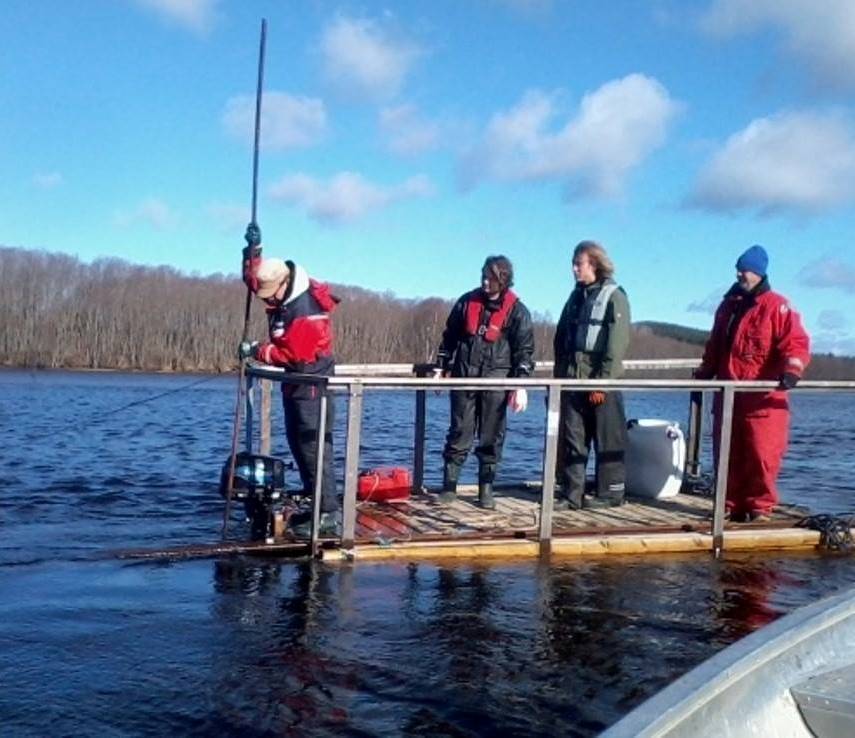
piccolo_boat

The crew working on the trap (photo: Teemu Collin).

It took us four sampling seasons, filled with trial and error, to achieve partial sampling success for our project. The first year we tried floating smolt traps like those often used for Pacific salmon. Although these can be adequate when there are large numbers of smolt migrating, we did not catch sufficient numbers of smolt to make mark-recapture estimates. During years two and three, we imported stationary traps, a Finnish design, that are anchored to the river bottom with 3-4-meter-long thick iron poles. It takes two days of hard labor for a work crew to drive these into the substrate by hand, balancing on the deck while holding the boat in position in the strong river flow (see photos). Inspired by the work to setup these Finnish traps, the title for this story comes from the classic song about mine workers – the iron bars didn’t weigh 16 tons, but just setting up the net was A LOT of work. Once the net was installed, the hard work began. Cleaning and emptying the net every day, and waiting for the spring flood to bring the salmon smolt. Although I was involved in this work, it is really our field crew that deserves most of the credit – it was a 24-hour a day, 7-day a week job, cleaning every day and staying vigilant for possible emergencies. During years two and three we came close to success – we had begun to catch larger numbers of smolt just at the time when flows became unmanageable and the net had to be removed. These years involved a lot of trial and error in operating and maintaining the net, cleaning, sewing mesh, clearing debris. The worst of it was cutting the net out during high flows, just when it seemed the smolt were beginning to run.
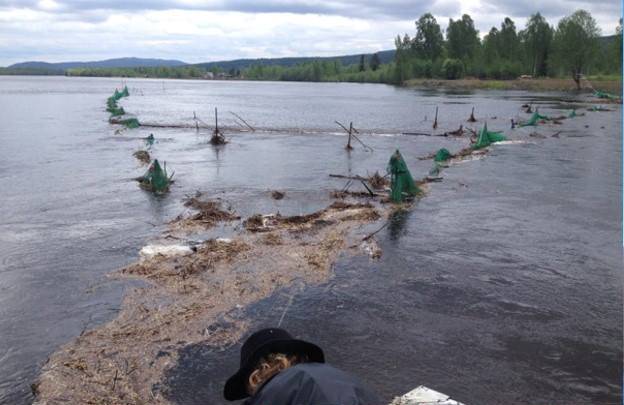
Piccolo1

The Finnish trap (photo: Teemu Collin).

Each year we’d improved our technique and catch; the second year we caught over 300 smolt, and made our first rough estimates of production. However, we had yet to document a substantial wild smolt run. We managed to scrape together enough funding for one more try, and set to work for our final attempt. With two years’ experience, we installed the net in record time and had a good cleaning and maintenance routine. The field crew was on the job every day and smolt numbers began to climb as did the prognosis for the spring flood. They managed to continue to fish the net right into the beginning of the flood, and finally, on the last five days that they could fish before the flood, they hit the jackpot! SMOLTS! The field crew caught over 1000 smolt during their last five days – 425 the day before they had to remove the net. This one-week catch exceeded the total number of smolt we’d caught the previous two years combined. Our mark-recapture estimates suggest that over 15,000 wild salmon smolt migrated that year, documenting substantial production of wild landlocked Atlantic salmon, probably the largest remaining population in the world. Our hard work and persistence paid off – national and international awareness of the Klarälven salmon has continued to grow, and they are the focus of renewed efforts to maintain and restore wild salmon populations that have been impacted by centuries of anthropogenic impacts.”


beta

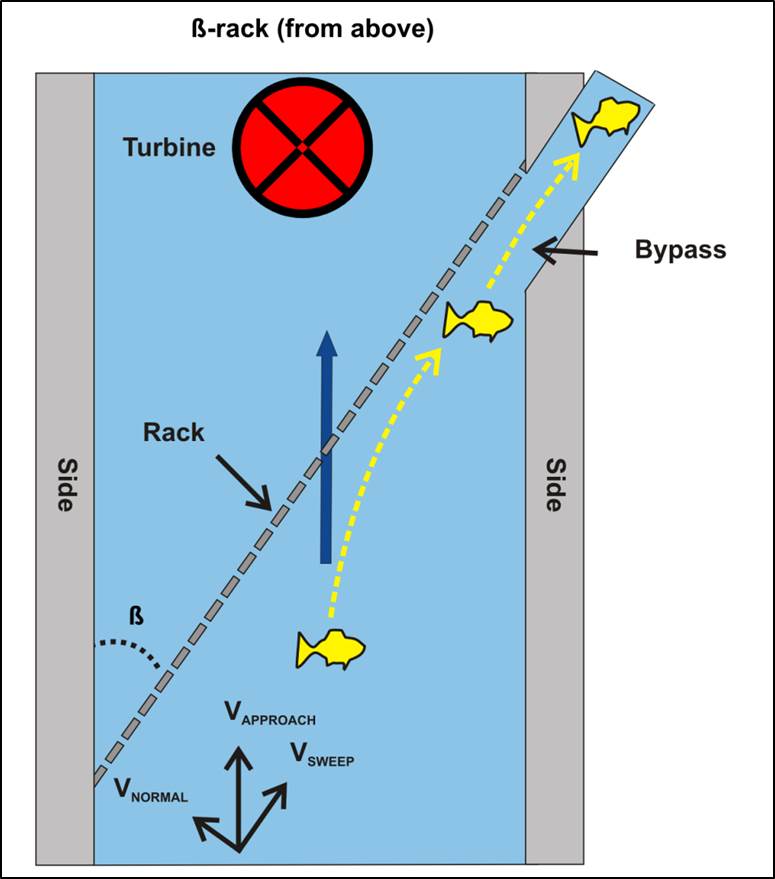
Ett låglutande galler (s.k. beta-galler). Då vattenhastigheten mot gallret alltid är mindre än svephastigheten längs med gallret sveps eller leds fisken mot gallrets slut. Vid gallrets slut finns flyktöppningen – tex. en eller flera ingångar till en bypass.

Låglutande galler används allt mer för att leda nedströmsvandrande fiskar till flyktöppningar och säkra pasagevägar förbi vattenkraftverk.Låglutande galler har tillexempel installerats för att passera nedströmsvandrande fisk i Ätran och Mörrumsån. Olle Calles, forskare vid Karlstads Universitet, leder en samling projekt som under det kommande året ska studera för- och nackdelar med låglutande galler med olika spaltvidd. Idén är att experimentellt testa hur låglutande galler med olika spaltvidd påverkar den avledande funktionen för laxsmolt och ål. Men även hydrauliska förhållanden (fallförluster) och drivgodsproblematik kommer att studeras under de olika spaltvidder. Hypotesen, vad gäller fisken, är att låglutande galler har både en fysisk och en beteendemässig avledande funktion. Detta innebär att även fisk som fysiskt kan passera gallret väljer att inte göra det utan att de i stället visar en preferens för flyktöppningarna. Genom att testa olika spaltvidder hoppas man kunna hitta en spaltvidd som är optimal för att kombinera fiskpassage och vattenkraftsproduktion.

Ålprojektet finansieras av Krafttag Ål medan lax experimenten finansieras av Energiforsks “Miljöprogram vattenkraft”.

Läs mer om ålexperimentet här: Betydelsen av spaltvidd på låglutande galler med avseende på ålpassage.

Last Tuesday, Ewa Orlikowska, PhD-student at Swedish University of Agricultural Sciences, gave a seminar titled “Gaps in ecological research on the world’s largest internationally coordinated network of protected areas: A review of Natura 2000” at Karlstad University. The seminar is available online upon request. Send an e-mail to john.piccolo@kau.se to get access to the seminar.

The papers Gaps in ecological research on the world’s largest internationally coordinated network of protected areas: A review of Natura 2000 and Contribution of social science to large scale biodiversity conservation: A review of research about the Natura 2000 network, both by Orlikowska et al. relate to the seminar content.

natura2000

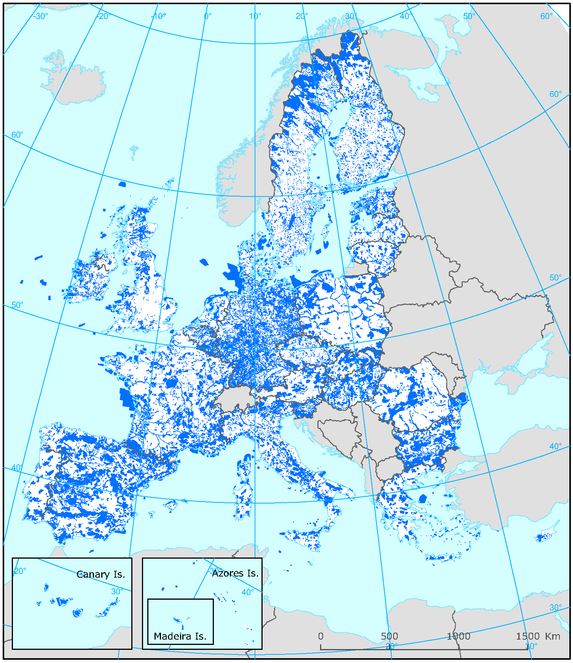
Natura 2000 sites. Map from European Environment Agency.

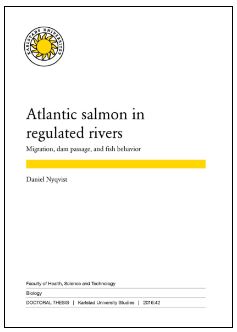
nyqvist2016cLast Friday, I, Daniel Nyqvist, successfully defended my PhD-thesis “Atlantic salmon in regulated rivers – Migration, dam passage, and fish behavior” at Karlstad University. Scott Hinch (University of British Columbia, Canada) was opponent and Eva Thorstad (NINA, Norway), Kim Aarestrup (DTU AQUA, Denmark) and Hans Lundqvist (Swedish University of Agriculture) constituted the grading committee (betygskommitté). The short abstract of the thesis reads:

“Hydropower dams block migration routes, thereby posing a threat to migratory fish species. Fishways and other fish passage solutions may aid fish to pass hydropower dams. A functional fish passage solution, however, must ensure safe and timely passage for a substantial portion of the migrating fish. In this thesis, I focus on downstream passage and evaluate the behavior and survival of migrating Atlantic salmon in relation to dams in systems with (1) no fish passage solutions (2) simple passage solutions (3) best available passage solutions. In addition, I studied the survival and behavior of post-spawners and hatchery-released smolts.

A large portion of the spawners survived spawning and initiated downstream migration. For hatchery-reared smolts, early release was associated with faster initiation of migration and higher survival compared to late release. Multiple dam passage resulted in high mortality, and high spill levels were linked to high survival and short delay for downstream migrating salmon. For smolts, dam passage, even with simple passage solutions, was associated with substantial delay and mortality. Rapid passage of a large portion of the migrating adult salmon was achieved using best available passage solutions.”

The frame of the thesis is available here. Already published papers included in the thesis are Post-Spawning Survival and Downstream Passage of Landlocked Atlantic Salmon (Salmo salar) in a Regulated River: Is There Potential for Repeat Spawning? (in River Research and Applications) and Migratory delay leads to reduced passage success of Atlantic salmon smolts at a hydroelectric dam (in Ecology of Freshwater Fish). For full access to the thesis, contact daniel.nyqvist@kau.se.

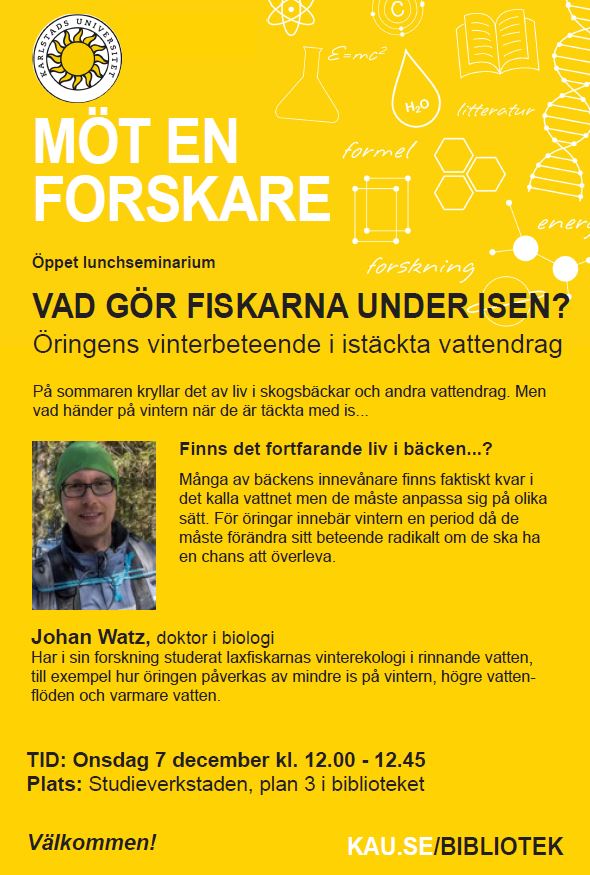
Imorgon, onsdagen den 7:e december, kommer Johan Watz, forskare vid Karlstads Universitet, att berätta om öringens vinterbeteende i rinnande vatten. Evenemanget är en del av universitetets “Möt en forskare”-serie och ges kl. 12:00 – 12:45 i Studieverkstaden på plan 3 i universitetets bibliotek. Alla är välkomna!

motenforskare

flodparlmussla

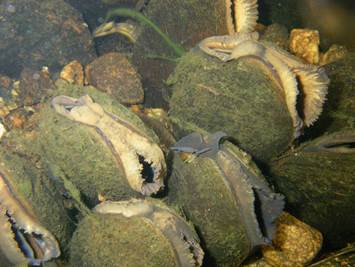
Freshwater pearl mussels.

The paper “Heavy loads of parasitic freshwater pearl mussel (Margaritifera margaritifera L.) larvae impair foraging, activity and dominance performance in juvenile brown trout (Salmo trutta L.)”  by Karl Filipsson, Tina Petersson, Johan Höjesjö, John Piccolo, Joacim Näslund, Niklas Wengström, Martin Österling was recently published in Ecology of Freshwater Fish. In the abstract the authors write:

“The life cycle of the endangered freshwater pearl mussel (Margaritifera margaritifera) includes a parasitic larval phase (glochidia) on the gills of a salmonid host. Glochidia encystment has been shown to affect both swimming ability and prey capture success of brown trout (Salmo trutta), which suggests possible fitness consequences for host fish. To further investigate the relationship between glochidia encystment and behavioural parameters in brown trout, pairs (n = 14) of wild-caught trout (infested vs. uninfested) were allowed to drift feed in large stream aquaria and foraging success, activity, agonistic behaviour and fish coloration were observed. No differences were found between infested and uninfested fish except for in coloration, where infested fish were significantly darker than uninfested fish. Glochidia load per fish varied from one to several hundred glochidia, however, and high loads had significant effects on foraging, activity and behaviour. Trout with high glochidia loads captured less prey, were less active and showed more subordinate behaviour than did fish with lower loads. Heavy glochidia loads therefore may negatively influence host fitness due to reduced competitive ability. These findings have implications not only for management of mussel populations in the streams, but also for captive breeding programmes which perhaps should avoid high infestation rates. Thus, low levels of infestation on host fish which do not affect trout behaviour but maintains mussel populations may be optimal in these cases.”

Read the paper here. If you don’t have access to the journal’s content, email any of the authors.